Building Credit From Zero: Where to Start
Building credit from nothing comes down to getting one account that reports to the credit bureaus, using it lightly, and paying on time every month. The Federal Trade Commission explains that a credit score is typically a number between 300 and 850 that estimates how likely you are to repay a loan and make payments on time, and that it is based on information in your credit report (FTC, Credit Scores, read October 9, 2026). With no credit history there is nothing to score yet, so the first job is to create a history the bureaus can see. This guide explains the common starter options, the habits scoring systems reward, and how to check your progress for free.
What Credit Scores Look At
The FTC notes that scoring systems differ but lists common factors from your credit report:
- Paying bills on time. Late payments, collections or bankruptcy are likely to hurt a score.
- How much of your available credit you use. Owing close to your credit limit will probably hurt your score.
- Length of credit history. A short history may hurt, but on-time payments and low balances can offset that.
- Recent applications. Too many new accounts in a short time can hurt.
- Number and types of accounts.
The FTC's own summary of how to improve a score: pay bills on time, pay down outstanding balances, and avoid opening several new accounts at the same time.
Starter Options
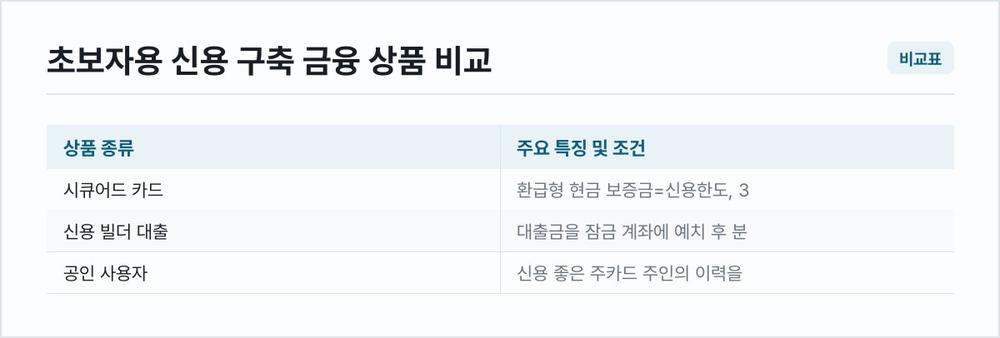
Secured credit card
You pay a refundable security deposit, which usually becomes your credit limit. Used lightly and paid on time, it builds history like any other card. Before applying, confirm that the issuer reports to all three nationwide credit bureaus, read the fee schedule for annual or monthly fees, and ask whether and when the card can graduate to an unsecured card with your deposit returned.
Credit-builder loan
Offered by some credit unions and community banks: the loan amount is held in a savings account while you make payments, and you receive the money at the end. Payments are reported to the bureaus. Compare the interest and fees with the benefit.
Authorized user
A family member with a long, clean card history can add you as an authorized user. Ask whether the issuer reports authorized users to the bureaus, and agree on how the card will be used, since late payments on that account can affect you both.
Student or starter cards
Some issuers offer cards designed for people with limited history. Read the terms carefully and keep the balance low.

A Step-by-Step Plan
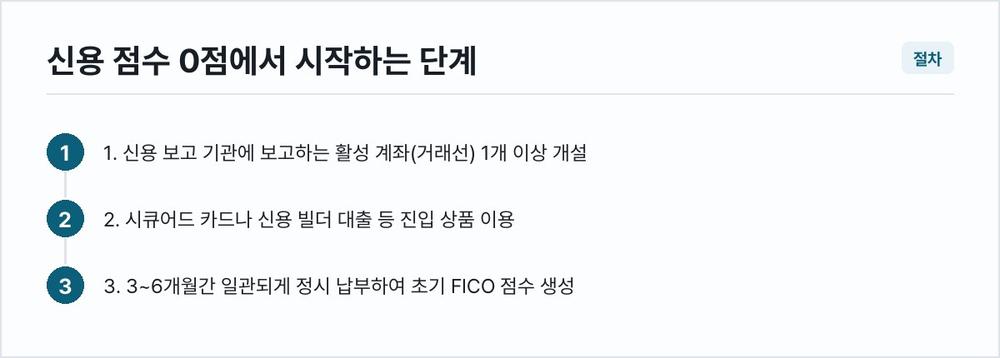
- Check your credit report to confirm there are no mistakes or accounts you don't recognize.
- Open one starter account that reports to all three bureaus.
- Use it for a small, regular purchase, such as a streaming subscription or a tank of fuel.
- Pay the full statement balance on time every month; set up automatic payment from checking as a safety net.
- Keep the balance low relative to the limit.
- Wait before adding more accounts; let the history build.
- Recheck your reports regularly to confirm accounts are reported correctly.
How to Check Your Credit for Free
The FTC says only one website, AnnualCreditReport.com, is authorized to fill orders for the free credit reports you are entitled to by law, and that the three nationwide bureaus (Equifax, Experian and TransUnion) have permanently extended a program that lets you check your report from each once a week for free there. Federal law also requires each bureau to give you a free report every 12 months on request (FTC, Free Credit Reports, read October 9, 2026). The FTC warns about other sites that claim to offer free reports or scores and then charge for monitoring.
Scores are different from reports: the FTC notes you often have to pay to get your credit score, though some banks and card issuers show a score to customers. If your report is accurate and your payments are on time, your score follows.
How Long Does It Take?
Scoring models need some account history before they can produce a score, and the score keeps improving as on-time payments accumulate and accounts age. There is no shortcut that replaces time and consistent on-time payments. Be wary of anyone promising to raise a score quickly for a fee.
Mistakes to Avoid
- Missing a payment, even once; set up autopay.
- Running the card close to its limit.
- Applying for many cards at once.
- Closing your oldest account without a reason.
- Paying for "credit repair" that promises to remove accurate information; you can dispute errors yourself for free.
Comparison: Starter Options
| Option | What you need | Watch for |
|---|---|---|
| Secured card | Refundable deposit | Fees; confirm reporting to all three bureaus; graduation policy |
| Credit-builder loan | Regular payments | Interest and fees |
| Authorized user | A trusted card holder | Their payment habits affect you |
| Starter card | Approval with limited history | Interest rate if you carry a balance |
If You Find a Mistake on Your Report
The FTC notes that federal law requires the credit bureaus to allow you to dispute mistakes, and advises contacting both the credit bureau and the business that supplied the information. Explain the error in writing, include copies of supporting documents, and keep records of what you sent and when. Errors on a thin credit file can have an outsized effect, so it is worth checking each bureau's report when you start building credit and again a few months later.
Protecting Your New Credit
Identity theft can damage credit before you notice it. The FTC suggests checking reports regularly to spot accounts you don't recognize. Consider placing a credit freeze with each bureau when you are not applying for credit; it is free and can be lifted when you need to apply. Use strong, unique passwords and two-factor sign-in for your card and bank accounts.
Frequently Asked Questions
Does checking my own credit hurt my score?
No. Checking your own report is not a hard inquiry. Applications for new credit can create inquiries that some scoring systems count.
Do secured credit cards require a credit check?
Policies vary by issuer. Read the application terms before applying.
Can I build credit without a credit card?
Yes, for example with a credit-builder loan or as an authorized user. Some services also add rent or utility payments to credit files; check which bureaus and scores use that data.
What score range is "good"?
The FTC explains that a higher score means businesses see you as less of a risk; scoring systems and lenders set their own thresholds.
Key Takeaways
- Start with one account that reports to all three bureaus.
- Pay on time every month and keep balances low.
- Check your reports free at AnnualCreditReport.com.
- Give it time; avoid quick-fix offers.
Sources and References
- Federal Trade Commission, Credit Scores (read October 9, 2026).
- Federal Trade Commission, Free Credit Reports (read October 9, 2026).