Photo by Ali Kazal / Pexels
1. Bear Type Identification
Photo by Ali Kazal / Pexels
Black Bear
| Color | Black, brown, cinnamon, blonde |
| Size | 200-600 lbs (90-270 kg) |
| Ears | Tall, pointed |
| Face | Straight profile |
| Shoulder | No hump |
| Claws | Short, curved (1.5") |
| Habitat | Forests across N. America |
| Behavior | Generally shy, climbs trees |
Grizzly / Brown Bear
| Color | Brown with grizzled tips |
| Size | 400-800 lbs (180-360 kg) |
| Ears | Short, rounded |
| Face | Dished (concave) profile |
| Shoulder | Prominent hump |
| Claws | Long, straight (2-4") |
| Habitat | W. Canada, Alaska, NW US |
| Behavior | Territorial, defensive of cubs |
Polar Bear
| Color | White to yellowish |
| Size | 900-1500 lbs (400-680 kg) |
| Ears | Small, rounded |
| Face | Long, narrow snout |
| Shoulder | No hump |
| Claws | Short, thick, non-retractable |
| Habitat | Arctic coasts, sea ice |
| Behavior | Predatory, curious |
2. What Should You Do? (Encounter Decision Tree)
3. Food Storage Guide
Bear Canister
Hard-sided, portable container. Required in many wilderness areas.
- Store 200+ ft (60m) from camp
- Place on flat ground away from cliffs
- Do NOT attach to pack
- Fits 3-5 days of food for 1 person
Bear Hang (PCT Method)
Suspend food bag from a tree branch using rope.
- Branch: 15+ ft high, 5+ ft from trunk
- Bag: 12+ ft off ground
- 200+ ft (60m) from camp
- Use 50 ft of paracord minimum
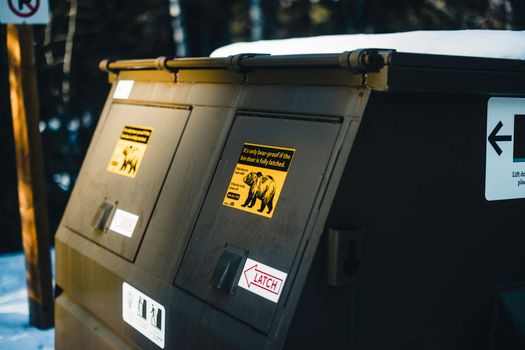
Bear Box (Provided)
Metal lockers at established campsites.
- Latch fully closed after each use
- Share space with other campers
- Store ALL scented items
- Check campground for availability
What Counts as "Food"?
All food, coolers, cooking gear, dishes, stoves, trash, recyclables, toiletries (toothpaste, sunscreen, lip balm, insect repellent), pet food, and anything with a scent.
4. Camp Setup (Bear-Safe Triangle)
5. Bear Spray Usage Guide
Before the Trip
- Buy EPA-registered bear spray (not pepper spray)
- Minimum 7.9 oz (225g) canister
- Capsaicin concentration: 1-2%
- Spray duration: 6+ seconds
- Check expiration date
- Practice drawing and removing safety clip
During an Encounter
- Remove safety clip while bear is still at distance
- Aim slightly downward (spray creates a cloud)
- Effective range: 12-30 ft (4-9 m) — wait until bear is within range
- Spray in 2-3 second bursts, sweeping side to side
- Create a wall of spray between you and the bear
- Back away slowly while continuing to face the bear
- Leave the area immediately after the bear retreats
Key Facts
| Effective range | 12-30 ft (4-9 m) |
| Success rate | 92-98% in field studies |
| Wind caution | Check wind; spray can blow back |
| Carry position | Chest holster or hip belt (NOT in pack) |
| TSA / Airlines | Cannot fly with bear spray |
6. Prevention Checklist
On the Trail
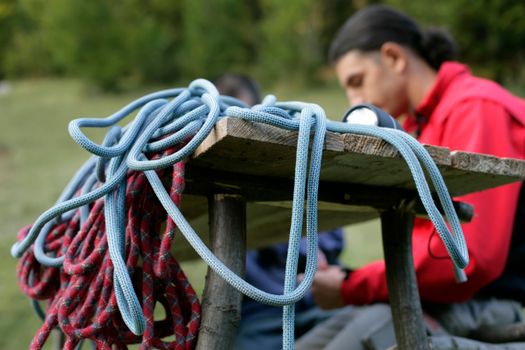
Photo by BOOM 💥 Photography / Pexels
At Camp
Photo by BOOM 💥 Photography / Pexels
7. Quick Reference Emergency Card
GRIZZLY / BROWN BEAR ATTACK
- Play dead: Lie face down, spread legs, hands behind neck
- Stay still until bear leaves the area
- If attack continues for more than 2 minutes, fight back
BLACK BEAR ATTACK
- Do NOT play dead
- Fight back aggressively: kick, punch, use rocks/sticks
- Target the nose and eyes
- Make yourself look big and loud
POLAR BEAR ENCOUNTER
- Do NOT play dead
- Back away slowly; do NOT run
- Get inside a building or vehicle if possible
- Fight back with everything available as last resort
- Use bear spray or firearm if available
Emergency Numbers: 911 (US) • 112 (EU) • Local ranger station
Bear spray effectiveness: 92-98% | Firearms: 76%
Bear spray is statistically more effective than firearms for stopping bear attacks.
Further reading
Complete bear safety guide: identify bear types, encounter decision tree, food storage, camp setup, bear spray usage, and emergency quick reference.
Related tools
What this page assumes, and where it stops
Jurisdiction
United States codes and agency guidance. Local codes may be stricter.
Assumptions
- Only what you enter on this page is used. Personal circumstances, exemptions, and special cases are not applied.
- Results are estimates for orientation, not determinations.
- Everything runs in your browser. Nothing you type is sent to a server.
Where you should not rely on this
This is general guidance and does not replace training, local codes, or professional judgment. In an emergency, get to safety and call your local emergency number first. Work that touches wiring, gas, or structure should be done or inspected by a licensed professional.
Official sources
Page reviewed 2026-09-04 · rules current as of that review were not independently verified against every jurisdiction · next review scheduled annually
Frequently asked questions
How do I tell a black bear from a grizzly?
Not by colour — black bears come in black, brown, cinnamon and blonde. Look at the shoulders, ears and face: a grizzly has a prominent shoulder hump, short rounded ears and a dished, concave face, while a black bear has no hump, tall pointed ears and a straight profile. Claw length differs too, 2 to 4 inches against about 1.5.
Does the right response depend on which bear it is?
Yes, and that is why the decision tree on this page asks for the species before anything else. It then asks what the bear is doing — unaware, calm, approaching, or charging — and where you are, because the answer for a bear near your food is not the answer for a bear near cubs.
How far from camp should food be stored?
At least 200 feet, about 60 metres, whether you use a canister or a hang. A hard-sided bear canister is the most reliable method on this page and is required in many wilderness areas; put it on flat ground away from cliffs and never strap it to your pack.
Is this guide enough on its own?
No. Rules differ by park and by season, and some areas require an approved canister by regulation rather than by preference. Check the National Park Service guidance linked on this page and the rules for the specific area you are entering before you go.