Direct answer
When a home insurance claim check arrives with both the homeowner and the mortgage company listed as payees, the lender holds a legal stake in the property repair funds. The quickest solution is to contact the mortgage company's loss draft department immediately to learn their specific endorsement process. Most lenders require the homeowner to sign the check, gather contractor estimates, and mail the physical check to a specialized processing center. Failing to involve the lender can result in frozen funds, rejected deposits at the bank, or a breach of the mortgage contract, because the lender must ensure the home is fully repaired to protect its collateral value.
What this usually means
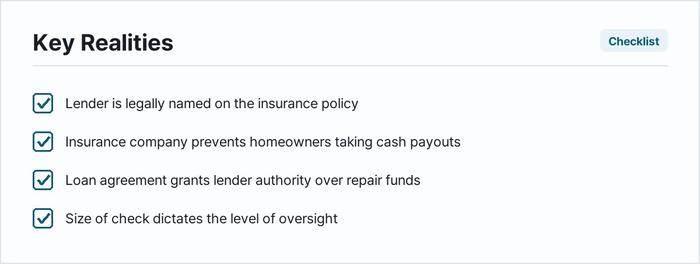
Receiving a dual-payee check from an insurance provider is standard procedure whenever a property has an active mortgage lien. This situation typically points to one of several underlying realities regarding how property loans and insurance payouts intersect. First, the lender is legally named on the insurance policy as a loss payee to protect their financial investment in the structure. Second, the insurance company issues the funds this way to prevent homeowners from taking cash payouts and leaving structural damage unfixed. Third, the loan agreement explicitly grants the mortgage company authority to control how repair funds are disbursed. Fourth, the size of the check often dictates the level of oversight, with smaller amounts sometimes bypassing strict lender scrutiny while larger sums trigger mandatory inspection schedules. Finally, it means the repair process requires patience, as financial institutions operate on specific bureaucratic timelines that rarely match the urgency of emergency home repairs.
Understanding these underlying meanings helps set realistic expectations for the timeline of cashing the check. Homeowners often panic when they see a financial institution's name on their personal compensation for storm, fire, or water damage, assuming the lender is trying to steal the funds. In reality, the mortgage servicer acts as a temporary custodian of the money, releasing it in stages as contractors complete milestones of the rebuilding work. Recognizing this procedural safeguard prevents costly mistakes, such as attempting to forge an endorsement or depositing the check into a personal account without authorization, which creates severe legal and banking complications.

What to do, in order
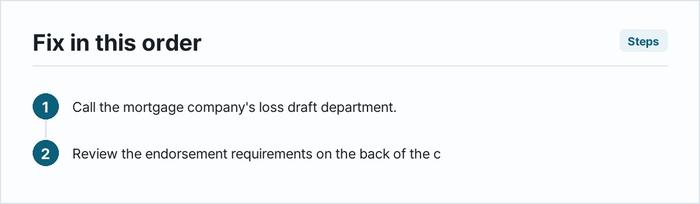
Call the mortgage company's loss draft department. This initial step rules out guessing about the lender's unique mailing address, endorsement rules, and document requirements. Every mortgage servicer uses a different internal division—often called loss drafts or property loss—to handle insurance payouts. Contact the main customer service line, request the loss draft department, and ask for a detailed checklist of what they need to sign over the funds. This rules out sending documents to the wrong processing center, which frequently causes checks to get lost in corporate mailrooms. Preparing a notepad during this call ensures every requirement is captured accurately before any paperwork leaves the home. Taking this direct action eliminates weeks of waiting and administrative ping-pong between local bank branches and distant corporate offices.
Review the endorsement requirements on the back of the check. This rules out invalid signatures that banks or lenders reject outright. Both named payees must sign the back of the check, but the mortgage company typically specifies whether a standard signature, a signature followed by a title, or a signature accompanied by a specific phrase like "Pay to the order of [Mortgage Company]" is mandatory. Writing anything unauthorized on the back of the check can invalidate the instrument. This step rules out the possibility of a standard bank teller accepting a improperly endorsed negotiable instrument, saving the homeowner an unnecessary trip to a local financial institution.
Gather contractor estimates, scope of work, and repair bids. This rules out the mortgage company holding the funds indefinitely due to a lack of verified repair plans. Lenders rarely release an entire large insurance check upfront. Instead, they demand a signed contract from a licensed builder, a detailed line-item estimate matching or exceeding the insurance adjuster's report, and proof of contractor licensing and insurance. Assembling these documents immediately rules out the rejection of the initial paperwork packet. Providing full documentation on the first submission drastically accelerates the internal review timeline at the mortgage servicing facility.
Request the required initial disbursement inspection packet. This rules out missed inspections that delay the release of subsequent payout phases. For substantial claims, the mortgage company will often release a portion of the funds—such as the first third or half—immediately upon receiving the signed check and contractor agreement. Yet they routinely hold back the final payout until an inspector verifies that the work has reached specific completion milestones. Requesting this inspection schedule in writing rules out unexpected cash flow shortages mid-way through a home rebuilding project, allowing the homeowner to coordinate payments with the general contractor seamlessly.
Mail or physically submit the check along with all requested paperwork via a trackable service. This rules out lost-in-the-mail scenarios that derail property repairs. Sending negotiable financial instruments through standard, untracked mail introduces massive risk. Utilizing a courier service with delivery confirmation rules out disputes regarding whether the mortgage company ever received the physical endorsement package. Keeping digital copies of every signed document, the front and back of the check, and the postal tracking receipt guarantees a secure paper trail if any administrative office misplaces the submission.
Quick reference: symptom, likely cause, what to do
| Symptom | Likely cause | What to do |
|---|---|---|
| Bank refuses to deposit the check | Check lists two separate payees without an endorsement from the lender | Contact the mortgage company loss draft department to secure proper sign-off instructions. |
| Mortgage company holding all funds | Missing contractor agreement or detailed repair estimate | Submit a signed contract from a licensed builder matching the adjuster report. |
| Delayed release of final payout check | Unverified completion of final remodeling milestones | Schedule a lender inspection to prove construction work is finished. |
| Check lost in corporate mailroom | Sent via standard mail without delivery confirmation | Resend via a trackable courier service keeping copies of tracking numbers. |
| Servicer demands notarized signatures | High-value claim requiring extra fraud prevention steps | Visit a local bank or shipping store to notarize endorsement signatures. |
| Contractor demands upfront payment | Misunderstanding of dual-payee check processing timelines | Explain the lender escrow process and negotiate a smaller initial deposit. |
How to keep it from happening again
Preventing future administrative bottlenecks with home insurance checks requires proactive communication with both the insurance carrier and the mortgage lender long before a disaster strikes. Review the loss payee clause on the current property insurance policy to ensure the correct mortgage loan number and address are listed accurately. When filing a minor claim where repair costs fall below the deductible or a very low threshold, evaluate whether involving the insurance company is financially sensible, given that small payouts still trigger lender paperwork loops. Maintaining a digital folder containing the mortgage agreement, loan servicing contact details, and policy declarations page ensures instant access to necessary reference numbers when a claim arises. Establishing a direct line of digital communication with the loan servicer's insurance tracking division helps resolve future dual-payee issues before checks are even printed, keeping home repair funds flowing smoothly without unexpected administrative roadblocks.
Can I cash an insurance check made out to me and my mortgage company without the lender's signature?
No. Banks cannot legally deposit a negotiable instrument bearing two payees into a single-owner account without proper endorsement from both parties. Doing so violates banking regulations and can trigger fraud investigations or account freezes.
How long does the mortgage company take to endorse an insurance check?
Processing times vary widely depending on the lender and the claim amount, typically ranging from several business days to a few weeks. Providing complete contractor estimates and clear documentation on the initial submission speeds up this timeline significantly.
Will the mortgage company release all the money at once?
For small claims, some lenders release the full amount directly to the homeowner. For large claims, lenders usually disburse funds in phased installments tied to inspection milestones to ensure the property is fully repaired.
What happens if my contractor needs money before the lender releases funds?
Many contractors understand the mortgage insurance check process and accept a modest out-of-pocket deposit or wait for the initial lender disbursement. Discuss this scenario with the contractor during the initial bidding phase.
Can I change the mortgage company name on the insurance check?
No. The insurance company issues the check based on the active lienholder recorded on the property title and insurance policy. Altering or attempting to remove the lender's name is illegal.
🔢 Try our free Home Equity Calculator
Calculate Now →Disclaimer
This article is general information, not financial, tax or legal advice. Rules, rates and eligibility change and depend on where a reader lives and on their own situation. Figures here are illustrative; confirm current terms with the provider or agency involved, and consult a licensed professional before acting on a decision that carries real money.