Direct answer
When a borrower applies for the federal Fresh Start program to resolve a student loan default, the removal of a pending or active tax refund offset depends on administrative processing times between the Department of Education and the Department of the Treasury. The quickest way to address a delayed offset removal is to confirm that the loan servicer has officially processed the Fresh Start enrollment application and transitioned the account out of default status. This verification rules out paperwork delays caused by incomplete application submissions or outdated contact records held by the federal loan servicer.
What this usually means
An unexpected tax refund offset or a failure to remove a scheduled Treasury offset usually indicates one of several administrative bottlenecks in the federal student loan system. The most frequent cause is a lag in communication between the office of Federal Student Aid and the Bureau of the Fiscal Service, which manages tax refund interceptions for defaulted debts. Even after a borrower submits a Fresh Start application, the active intercept order may remain queued in automated federal payment systems until manual overrides are applied by agency personnel.
Another common cause is the presence of other non-student-loan government debts. The Treasury Offset Program intercepts federal tax refunds for multiple types of delinquent obligations, including past-due child support, state unemployment compensation debts, or other federal agency liabilities. If a borrower has multiple outstanding debts outside the federal student loan portfolio, the tax refund offset will persist even after the student loan default is successfully addressed through the Fresh Start initiative.
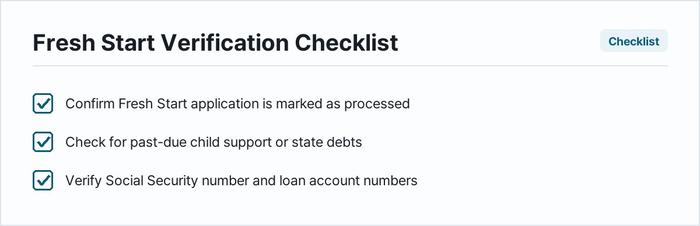
A third cause involves processing errors on the Fresh Start enrollment form itself. If the Social Security number, personal identification details, or loan account numbers provided on the application do not match official Department of Education records exactly, the system will reject the transaction. This leaves the account in default status and allows scheduled tax refund offsets to proceed uninterrupted during tax season.
A fourth possibility stems from the timing of the tax return filing relative to the date of loan rehabilitation or Fresh Start enrollment. If the Department of the Treasury processed the tax refund offset before the Department of Education transmitted the default cancellation notice, the interception will execute as scheduled. Reversing this specific transaction requires navigating specialized refund request procedures through the Bureau of the Fiscal Service rather than waiting for automatic systemic adjustments.

What to do, in order
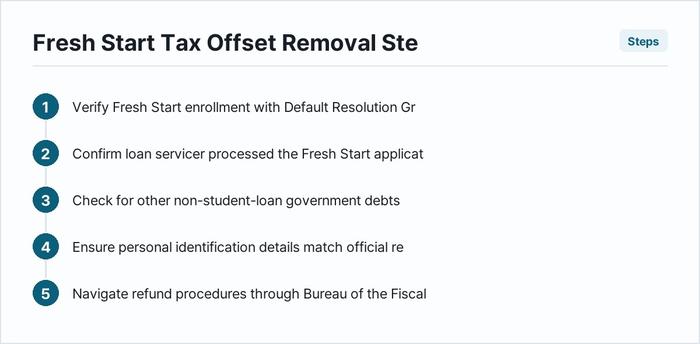
Verify Fresh Start enrollment status with the Default Resolution Group. Contact the official federal student aid support line or log into the official student aid account portal to confirm that the Fresh Start application has been marked as processed. This step rules out unsubmitted applications, incorrect form entries, and communication failures between the borrower and the loan servicer. If the system still displays active default status, the offset order remains legally valid on the Treasury side. Completing this verification ensures that the administrative machinery required to halt the offset has actually been triggered at the federal level. Borrowers must ensure that all personal identifying information matches government records perfectly to prevent processing freezes that leave tax refund interception orders active in the automated payment clearinghouse systems. When the default status is officially removed, the loan is transferred to a participating federal loan servicer, which initiates the formal notification process to the Department of the Treasury to release any pending administrative wage garnishments or tax refund offsets currently scheduled for execution.
Contact the Bureau of the Fiscal Service. If the Department of Education confirms that the Fresh Start application was processed weeks ago but a tax refund offset still occurred, contact the Treasury Offset Program call center directly. This step rules out residual automated clearinghouse delays and confirms whether the interception resulted from the student loan default or an entirely separate government debt. The Bureau of the Fiscal Service manages the actual execution of offsets, and speaking with a representative can clarify whether a release notice has been received from the Department of Education. If the notice has not arrived, borrowers can request that the agency verify the transmission status with the Department of Education to expedite the administrative hold release. This targeted inquiry prevents weeks of waiting for automated systems to synchronize across different federal departments and ensures that any funds intercepted in error are identified quickly for potential review and resolution under applicable administrative guidelines.
Review past-due notices for non-student-loan government debts. Examine all official notices received from federal and state agencies regarding outstanding financial obligations. This step rules out secondary liabilities such as delinquent state income taxes, unpaid federal housing program balances, or past-due child support obligations that also trigger Treasury offsets. Many borrowers assume that all tax refund interceptions relate exclusively to defaulted student loans, failing to recognize that multiple government entities use the exact same offset mechanism. Identifying an alternative debt allows the borrower to contact the specific agency responsible for that claim to negotiate a separate resolution or determine if a hardship exemption applies to the intercepted tax refund. Resolving these secondary claims is necessary because clearing the student loan default through Fresh Start will not stop offsets originating from other non-educational government liabilities.
Submit a formal inquiry for tax refund review if the offset occurred during the processing window. File a formal request for review through the Bureau of the Fiscal Service if the tax refund was seized during the transition period when the Fresh Start application was actively being processed. This step rules out permanent loss of funds by establishing a formal dispute record regarding the timing of the default resolution versus the execution of the Treasury offset. While automatic refunds of seized tax returns are not guaranteed under every circumstance, documenting the precise timeline of Fresh Start enrollment provides the necessary evidence to request administrative consideration. Borrowers should keep copies of all confirmation emails, loan status change notifications, and tax return filing documents to support the review request and accelerate the administrative determination process handled by federal financial management personnel.
Quick reference: symptom, likely cause, what to do
| Symptom | Likely cause | What to do |
|---|---|---|
| Tax refund offset occurs despite submitting Fresh Start | Lag in transmission between Department of Education and Treasury | Contact Default Resolution Group to confirm application processing |
| Offset persists after loan status changes to current | Interception driven by a non-student-loan government debt | Check notices for child support or other federal agency liabilities |
| Fresh Start application shows as rejected or pending | Incorrect Social Security number or personal details on form | Resubmit application with verified, accurate identification data |
| Refund seized during the exact week of processing | Timing overlap between Treasury batch runs and loan transfer | File a formal review request with the Bureau of the Fiscal Service |
| Unable to access online portal to check status | Local browser cache corruption or government server maintenance | Clear browser data, try another browser, or check back later |
| Servicer has no record of the Fresh Start enrollment | Form submitted to incorrect entity or technical glitch | Re-apply directly through the official Federal Student Aid website |
How to keep it from happening again
To prevent future tax refund offsets and maintain good standing on federal student loans after utilizing the Fresh Start program, borrowers must establish a sustainable repayment plan. Once the default status is removed and the loans are transferred to a standard servicer, enrolling in an income-driven repayment plan ensures that monthly payment amounts remain manageable based on current earnings and family size. Setting up automatic debit payments through the loan servicer prevents accidental missed due dates that could eventually lead back to delinquency and default proceedings. Borrowers should also maintain updated physical mailing addresses, email addresses, and phone numbers within the official student aid profile to ensure that all future annual recertification notices and billing statements arrive without interruption. Regularly monitoring the loan account dashboard ensures that any administrative discrepancies are identified and resolved before reaching the severe stages of default and Treasury offset collection.
Can a tax refund be recovered if it was offset right before Fresh Start processing completed?
Borrowers can request an administrative review through the Bureau of the Fiscal Service, though automatic refunds for offsets executed prior to final default resolution are not guaranteed under standard operating rules.
Does Fresh Start remove default records from commercial credit bureaus?
Yes, successful enrollment and processing under the Fresh Start initiative results in the removal of the historical default notation from commercial credit reports within several weeks.
How does a borrower know if the Treasury Offset Program has received the cancellation notice?
Borrowers must contact the Default Resolution Group or the Bureau of the Fiscal Service directly to verify that the administrative hold and release notices have successfully synchronized across agencies.
Are private student loans eligible for the Fresh Start tax offset removal program?
No, the Fresh Start program is strictly limited to eligible defaulted federal student loans and does not apply to privately held student loans from banks or private lenders.
What happens to ongoing administrative wage garnishments when Fresh Start is approved?
Active administrative wage garnishments are ordered to stop once the loan successfully exits default status and transitions back to a standard federal loan servicer under the Fresh Start terms.
🔢 Try our free Loan Calculator
Calculate Now →Frequently Asked Questions
How long does it take for a tax refund offset to stop after joining Fresh Start?
The administrative process typically requires several weeks to transmit updates from federal loan servicers to the Department of the Treasury once a borrower enrolls in the Fresh Start program.
Will the Department of Education automatically refund a seized tax return?
Automatic refunds of previously offset tax returns are not standard under Fresh Start, but borrowers can request a review through the Bureau of the Fiscal Service if the offset occurred during specific operational pauses.
What happens to credit reports once Fresh Start removes the default status?
Default notation records are typically removed from commercial credit bureau reports within several weeks following successful enrollment and loan transfer back to a standard servicing status.
Does Fresh Start apply to commercially held Federal Family Education Loans?
Fresh Start applies to eligible defaulted federal student loans, including defaulted FFEL Program loans held by the Department of Education as well as those held by commercial lenders that qualify for consolidation.
Who should a borrower contact if the tax offset is not removed after two months?
Borrowers should contact the Default Resolution Group administered by the office of Federal Student Aid to verify that the enrollment application has been fully processed.
Disclaimer
This article is general information, not financial, tax or legal advice. Rules, rates and eligibility change and depend on where a reader lives and on their own situation. Figures here are illustrative; confirm current terms with the provider or agency involved, and consult a licensed professional before acting on a decision that carries real money.