Why Your Small Business Is Drowning in Manual Marketing Tasks
Did you know that 68% of small business owners spend more than 20 hours per week on repetitive marketing tasks that could be fully automated? If you feel like you are constantly playing catch-up with social media posts, email sequences, and ad performance tracking, you are not failing—you are simply under-equipped.
In 2026, the digital landscape has shifted from "nice-to-have" manual efforts to "must-have" automated ecosystems. Trying to scale a business today without AI-driven marketing software is like trying to cross the Atlantic in a rowboat; it is physically exhausting, dangerously slow, and frankly, unnecessary.
The tools below are compared on what their published documentation and pricing pages actually commit to, which is where the differences between them show up. This guide isn't about buzzwords; it’s about tactical implementation that recovers your time and doubles your ROI.

The State of Automated AI Marketing in 2026
Automation in 2026 is no longer about simple email scheduling; it is about predictive intelligence. AI now understands consumer sentiment, anticipates purchase intent, and adjusts your budget in real-time, 24 hours a day.

Small businesses that adopt these tools see, on average, a 30% increase in lead conversion rates within the first three months. The barrier to entry has vanished, leaving only a barrier to adoption. If you are still manually entering customer data into spreadsheets, your competitors are already three steps ahead.

Top 7 AI Marketing Tools for Small Business Growth
Selecting the right stack requires balancing ease of use with deep integration capabilities. Here are the top seven tools currently dominating the market for performance, reliability, and cost-to-value ratio.
1. HubSpot Marketing Hub: The All-In-One Powerhouse
HubSpot remains the gold standard for businesses looking to centralize their operations. Their AI-driven "Content Assistant" and "Breeze" automation suite handle everything from social media curation to complex CRM workflows.
2. Jasper AI: Scaling Your Content Production
If your biggest bottleneck is writing blog posts, emails, or ad copy, Jasper is your solution. It doesn't just write text; it learns your brand voice to ensure that your messaging remains consistent across every channel.
3. ManyChat: Conversational Marketing Automation
ManyChat transformed how small businesses handle customer support and sales through DM automation. It is the premier choice for turning Instagram or Facebook engagement into actual sales conversations without manual input.

4. AdCreative.ai: Generating High-Converting Ads
Creating professional ads usually requires a design team. AdCreative uses generative AI to produce high-conversion ad imagery and copy that is mathematically optimized for click-through rates.
5. Mailchimp (Intuit Assist): Smarter Email Journeys
Mailchimp has evolved far beyond a basic newsletter tool. With Intuit Assist, it now creates entire email customer journeys based on behavioral data, ensuring that your customers receive the right message at the right time.
6. Buffer: Intelligent Social Media Management
Buffer’s AI assistant helps you repurpose one piece of content into ten different formats for various platforms. It also suggests the optimal times to post based on your unique audience engagement data.
7. Zapier: The Glue Holding Your Stack Together
No tool works in isolation. Zapier allows you to connect your CRM, email platform, and ad software, creating automated "zaps" that move data between apps without you ever needing to touch a keyboard.
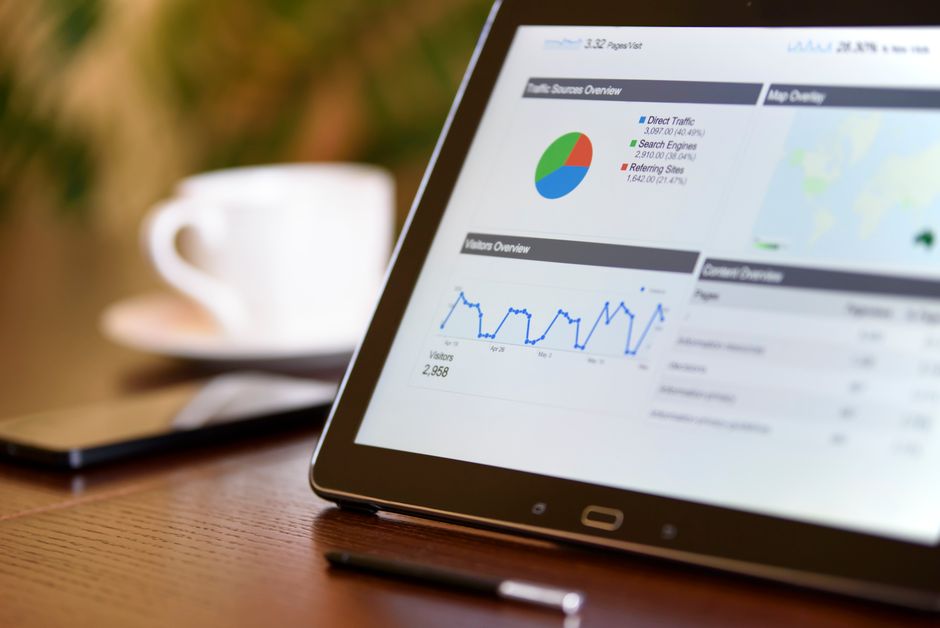
Comparison Table: Choosing Your Automation Stack
| Software | Primary Strength | Best For | Ease of Setup |
|---|---|---|---|
| HubSpot | CRM Integration | Growing Teams | Moderate |
| Jasper AI | Content Creation | Copywriters | Easy |
| AdCreative | Paid Advertising | E-commerce | Easy |
| Zapier | Connectivity | All Businesses | Moderate |

How to Implement AI Without Disrupting Your Operations
Implementation should never happen all at once. Start by automating your lowest-value, highest-volume tasks—usually email replies or simple lead data entry.

- Audit Your Workflow: Identify which tasks you repeat every single day.
- Start Small: Pick one "Zap" or automation to fix one specific pain point.
- Test for 30 Days: Measure the time saved rather than just the immediate ROI.
- Scale Up: Once one tool is mastered, connect the next piece of your stack.

The Risks of Ignoring Automation
The primary risk is not that AI will take over your marketing—it is that a business utilizing AI will replace yours. Companies failing to automate face rising customer acquisition costs and plummeting employee morale due to burnout.
Your goal isn't to remove the "human touch"; it is to automate the robotic tasks so you can provide more human touch where it actually matters: in strategy, complex problem-solving, and client empathy.

FAQ: Common Questions About AI Marketing
Is it safe to give AI access to my customer data?
Yes, provided you choose reputable, SOC 2 compliant platforms that follow privacy standards like GDPR or CCPA. Always check the platform’s "Data Usage Policy" to ensure your specific customer data is not being used to train the software’s public, global models.
How long does it take to see results?
Most users report significant time savings within the first 30 days. For AI-driven features like predictive ad optimization, expect 60 to 90 days of consistent data collection before the algorithm hits peak performance.
Can I replace my human team with these tools?
Absolutely not; these tools are designed to augment your workforce, not replace it. By offloading repetitive, data-heavy tasks, you free up your team to focus on high-level creative strategy and deeper customer relationship management.
Do I need a developer to implement these tools?
No. Most of these tools are "no-code" platforms specifically designed for non-technical small business owners. If you can use a drag-and-drop interface, you can successfully implement these automation tools.
How do I know which tool to start with?
Start with the biggest bottleneck in your current funnel. If you have plenty of traffic but no sales, start with email automation; if you have no traffic, start with ad creative or social media management tools.

Actionable Tips for Immediate Implementation
Stop overthinking your choice. The best tool is the one you actually use. Pick one from the list above and set a goal to have it integrated by the end of the week.
- Map your current funnel: Draw it out on a piece of paper and circle every manual step.
- Select your first automation: Choose the step that causes you the most frustration.
- Execute and Measure: Track your time spent on that task for one week, then compare it to the week after you automate.

Conclusion: Your Path to Scaling in 2026
The transition to an automated marketing stack is not just a tactical decision; it is a survival strategy. By delegating the grind to AI, you are not stepping away from your business—you are stepping up to the role of a strategist.
The tools listed here are designed to give you back your most valuable asset: time. Take the first step today by selecting one tool that solves your greatest bottleneck. Your future self, and your bottom line, will thank you.