What a Business Credit Card Should Do for a Startup

For a startup, the right business credit card is mainly a cash-flow and bookkeeping tool: it separates business spending from personal spending, gives a short interest-free window when paid in full, and earns rewards on purchases you would make anyway. It is not a source of long-term financing; carrying balances at credit card interest rates is one of the most expensive ways to fund a business. This guide explains the main types of business cards, how to compare them, what the legal protections are and are not, and the habits that keep a card from becoming a liability. It does not rank specific cards, because offers and terms change often.
This is general information, not financial or legal advice.
Why Separate Business and Personal Spending
- Cleaner books: one card statement shows business expenses, making bookkeeping and tax preparation easier.
- Expense control: employee cards with spending limits let you delegate purchases without sharing your own card.
- Building business credit history: some issuers report business card activity to business credit bureaus, which can help when you later seek other financing.
Keep in mind that most small-business cards require a personal guarantee, so you are personally responsible for the debt even if the business cannot pay.
Types of Business Cards
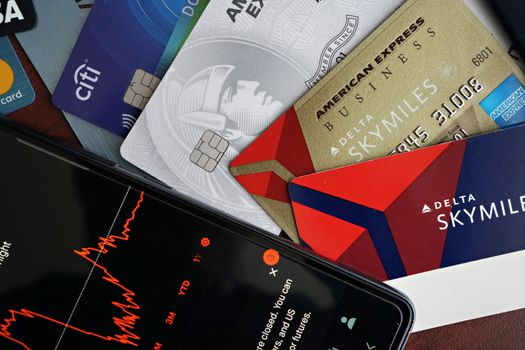
- Flat-rate cash back: the same rate on every purchase — simple and predictable for varied spending.
- Category rewards: higher rates on specific categories such as advertising, shipping, software or travel, often with spending caps.
- Travel points cards: points transferable to airline or hotel partners, usually with annual fees and travel perks.
- Charge cards: balances must be paid in full each cycle; they offer spending flexibility but no revolving credit.
- Corporate cards for startups: some financial technology companies offer cards underwritten on the company's cash balance or revenue rather than the founder's personal credit, sometimes without a personal guarantee; terms and eligibility vary widely.
How to Compare Cards
The Consumer Financial Protection Bureau's credit card glossary explains the terms that matter most, and they apply to business cards too (CFPB, Credit cards key terms):
- APR: the standard way to compare what borrowing costs.
- Grace period: the time between the end of a billing cycle and the due date, during which you may avoid interest by paying in full; card companies are not required to offer one.
- Balance transfers: often carry a fee, and promotional rates last only for a limited time.
- Cardholder agreement: sets out fees, your liability for unauthorized transactions and the APR.
Beyond those, compare the annual fee against rewards you will really earn based on your own spending, foreign transaction fees if you buy from overseas suppliers, employee card costs and controls, and integrations with your accounting software.
Know What Protections Apply
Many consumer protections in federal credit card law were written for consumer accounts. Business cards may not carry all the same limits on rate increases and fee practices, so read the cardholder agreement closely, especially the sections on changes to terms and penalty pricing. The CFPB notes that on consumer cards, being more than 60 days late can let the issuer raise the rate on all balances; business card terms can be stricter.
Using Introductory Rates Carefully

Some business cards offer a promotional low or zero interest rate for a period. This can help smooth a large, planned purchase if you have a realistic plan to repay before the promotion ends. The CFPB warns that promotional rates last a limited time and the rate may rise afterward, increasing payments. Write down the end date and a monthly repayment amount that clears the balance in time.
Habits That Keep a Card Working for You
- Pay the full statement balance every month, ideally by automatic payment.
- Reconcile monthly against receipts and your accounting records.
- Set employee limits and review their transactions.
- Keep utilization moderate relative to your credit limit.
- Review the card yearly when the annual fee posts and switch if your spending pattern has changed.
When a Card Is the Wrong Tool
Credit cards are poorly suited to funding payroll, long-term equipment or ongoing losses. For those needs, compare term loans, lines of credit, equipment financing or programs available through the U.S. Small Business Administration's lending partners, which usually cost less than revolving card debt. Disaster recovery, in particular, often qualifies for dedicated programs; check official disaster assistance channels before relying on a card.

Choosing at a Glance
| If your startup... | Consider |
|---|---|
| Has varied, unpredictable spending | Flat-rate cash back |
| Spends heavily on ads, software or shipping | Category rewards card |
| Travels often | Travel points card, if the fee is covered by value you use |
| Pays in full every month and wants high limits | Charge card or startup corporate card |
| Needs to borrow for months | A loan or line of credit instead of a card |
Setting Up Card Controls for a Team
As a startup grows, more people need to make purchases. Employee cards with individual limits, merchant-category restrictions and real-time notifications keep spending visible without slowing work down. Write a short expense policy covering what employees may buy, how receipts are submitted and how quickly, and who approves exceptions. Connect the card account to your accounting software so transactions are categorized automatically, and reconcile monthly so errors and unauthorized charges are caught early.
When an employee leaves, cancel their card the same day and review recent transactions. If a card is lost or used without permission, report it to the issuer immediately; the cardholder agreement explains your liability for unauthorized transactions, which can differ between business and consumer accounts.
Questions to Ask an Issuer Before Applying
- Is a personal guarantee required, and does the account report to my personal credit?
- What are the APR, annual fee and fees for employee cards and foreign transactions?
- How are rewards earned, capped and redeemed?
- Can terms change, and how much notice is given?
Frequently Asked Questions
Can I get a business card without an established business?
Many issuers accept sole proprietors and new businesses, usually based on the owner's personal credit and a personal guarantee.
Does a business card affect my personal credit?
Applications often involve a personal credit check, and some issuers report to personal credit bureaus, particularly if the account becomes delinquent. Ask the issuer how it reports.
Are business card rewards taxable?
Rewards earned on business spending are generally treated as a reduction in the cost of purchases rather than income, which can affect deductible amounts. Ask your accountant how to record them.
Is a corporate card without a personal guarantee better?
It shifts risk away from you personally, but eligibility and limits often depend on the company's cash and revenue. Compare all fees and requirements.
Key Takeaways
- Use a business card for separation, control and short-term float, not long-term borrowing.
- Compare APR, grace period, fees and rewards against your actual spending.
- Read the cardholder agreement; business card protections can differ from consumer cards.
- Pay in full monthly and review the card each year.
Sources and References
- Consumer Financial Protection Bureau, Credit cards key terms — APR, grace period, balance transfers, cardholder agreement, 60-day late penalty on consumer cards (page last modified December 28, 2022; read October 9, 2026).