Travel Credit Cards for Sports Fans: How to Choose

For fans who travel to games, a travel rewards card can help, but only if the rewards you'll actually use outweigh the annual fee and you pay the balance in full every month. Card offers, annual fees, bonus categories and transfer partners change often, so this guide doesn't rank cards or quote current fees. It explains how travel rewards work, which features matter for game-day travel, and how to compare offers using each issuer's own terms.
How Travel Rewards Work
- Earning: cards earn points or miles on purchases, often at higher rates in categories such as travel, dining or entertainment.
- Redeeming: points can be used for travel booked through the issuer, transferred to airline and hotel partners, or redeemed for statement credits; the value per point usually differs by method.
- Cobranded cards: airline or hotel cards earn that brand's currency and may add perks such as free checked bags or elite-status progress.
- Flat-rate cards: simple rewards on everything, with fewer perks to manage.
Features That Matter for Game-Day Travel
- Category bonuses that match your spending: flights, hotels, rideshare, dining, or entertainment and ticket purchases.
- Travel protections: trip delay, cancellation and interruption coverage, baggage coverage and rental car coverage, each with specific conditions in the card's benefits guide.
- No foreign transaction fees if you follow teams abroad.
- Airport perks such as lounge access or credits toward trusted-traveler programs.
- Transfer partners that include the airlines and hotels you use for away games.
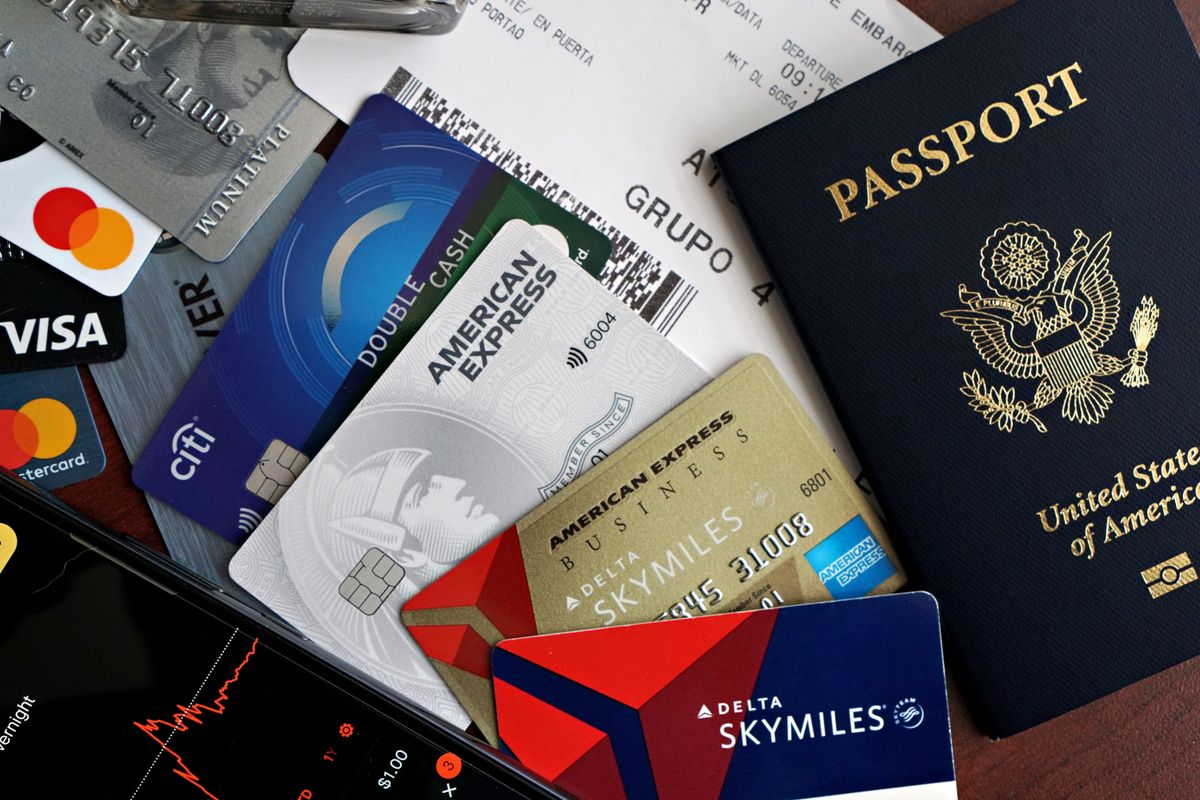
Is the Annual Fee Worth It?
Make a simple calculation with your own numbers. Estimate a year of spending in each category, multiply by the card's earning rates, and value points conservatively, for example at the statement-credit rate. Add only the credits and perks you'd use anyway. Subtract the annual fee. If the result is small or negative, a no-annual-fee card may be better. Remember that credits are often restricted to certain merchants or purchase types, so read the terms.
Watch the Costs
- Interest: rewards cards usually have high interest rates. Carrying a balance quickly cancels out rewards.
- Fees: annual fees, foreign transaction fees, late fees and balance transfer fees vary; the card's Schumer box and pricing information list them.
- Credit impact: applying adds a hard inquiry; opening several cards at once can lower your score.
How to Compare Offers
- Write down your typical yearly travel: flights, hotels, games, and where you travel from.
- List two or three cards whose categories and partners match.
- Read each issuer's pricing and terms, the benefits guide for travel protections, and the welcome-offer requirements.
- Run the annual-fee calculation above for each card.
- Check your credit report beforehand, free at AnnualCreditReport.com.

Making Points Go Further
- Book away-game trips early; award availability can be limited around big games and playoffs.
- Compare cash prices with points prices before redeeming.
- Use transfer partners only when the value is clearly better, since transfers usually can't be reversed.
- Keep track of expiration and inactivity rules for airline and hotel programs.
Using Travel Protections
Card travel protections usually require you to pay for the trip with the card and to file a claim with receipts within a set period. Coverage limits, covered reasons and exclusions vary; read the benefits guide before you rely on it, and consider separate travel insurance for expensive, non-refundable trips.
Comparison: Card Types for Traveling Fans
| Card type | Good for | Trade-off |
|---|---|---|
| General travel rewards | Flexible points, transfer partners | Often an annual fee; more to manage |
| Airline cobranded | Fans loyal to one airline hub | Rewards tied to one airline |
| Hotel cobranded | Frequent hotel stays | Rewards tied to one hotel group |
| Flat-rate cash back | Simplicity | Fewer travel perks |
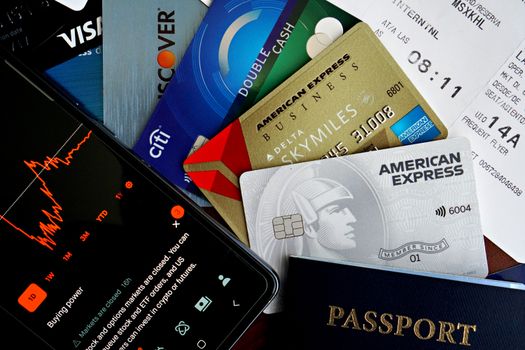
Planning a Season of Away Games
If you travel to several games a year, plan around the schedule. Once fixtures are released, list the trips you're likely to make and check flight and hotel prices early, both in cash and in points. Hub airports for your team's city and the opponents' cities can make one airline or alliance more useful than others, which affects whether a cobranded airline card or a flexible points card is the better fit. Group trips with friends can share hotel costs, and booking refundable rates gives flexibility if a game is moved, though refundable rates often cost more.
Avoiding Common Rewards Mistakes
- Chasing a welcome bonus by spending more than you would otherwise.
- Carrying a balance, which costs more in interest than rewards earn.
- Letting points expire in airline or hotel programs.
- Redeeming points for low-value options, such as some merchandise, when travel redemptions are worth more.
- Forgetting to cancel or downgrade a card before the annual fee posts if you no longer use it.
Keeping Track
A simple spreadsheet listing each card, its annual fee date, credits, and points balance helps you use benefits before they expire and decide each year whether a card still earns its keep.
Frequently Asked Questions
Is a premium travel card worth it for a few trips a year?
Only if credits and perks you'd use anyway cover the fee. Run the numbers with your own travel.
Can I earn points on game tickets?
It depends on how the card and the merchant code ticket purchases. Check the card's category definitions.
Do travel cards cover canceled games?
Trip cancellation coverage applies to covered reasons listed in the benefits guide, not necessarily to an event being canceled. Read the terms.
Will opening a card hurt my credit?
A hard inquiry and new account can cause a small, temporary dip; paying on time and keeping balances low matter most over time.
Business vs Personal Cards
If you run a small business or side business and travel for it, a business card can keep expenses separate and may offer different rewards categories. Only use business cards for genuine business spending, and read the terms; business cards may not carry all the consumer protections of personal cards. For personal fan travel, a personal card is usually the right choice.
Checking Your Credit Before Applying
Premium travel cards often require good credit. Check your credit reports for free at AnnualCreditReport.com, fix any errors, and apply only for cards you're likely to be approved for, since each application can add a hard inquiry.
Finally, remember that the best card is one that fits your normal spending without changing your habits; rewards are a bonus on top of a budget you already control.
Key Takeaways
- Pick a card whose categories and partners match how you travel to games.
- Calculate whether rewards and usable perks beat the annual fee.
- Pay in full every month to keep rewards worthwhile.
- Read the benefits guide before relying on travel protections.