Permanent Bathroom Mold Removal Methods
Bathroom mold only stays gone when two things happen together: the mold is cleaned off or the material it grows in is replaced, and the moisture that feeds it is brought under control. The U.S. Environmental Protection Agency puts it in one line: the key to mold control is moisture control. Its guide warns that if you clean up mold but do not fix the water problem, the mold will most likely come back, and that it is impossible to remove every mold spore indoors, because spores are present in air and dust and only grow where there is moisture (EPA, A Brief Guide to Mold, Moisture and Your Home). This guide follows that order: decide who should do the job, clean safely, replace what cannot be cleaned, then control humidity so the problem does not return.
Step 1: Decide Whether to Do It Yourself
EPA's guide says that if the moldy area is less than about 10 square feet (roughly a 3 ft by 3 ft patch), in most cases you can handle the job yourself. It recommends professional guidance when there has been a lot of water damage, when mold covers more than 10 square feet, when the damage came from sewage or other contaminated water, or when you suspect the heating and air system is contaminated, in which case it advises not running the system. If anyone in the home has health concerns such as asthma or allergies, EPA suggests consulting a health professional before starting.
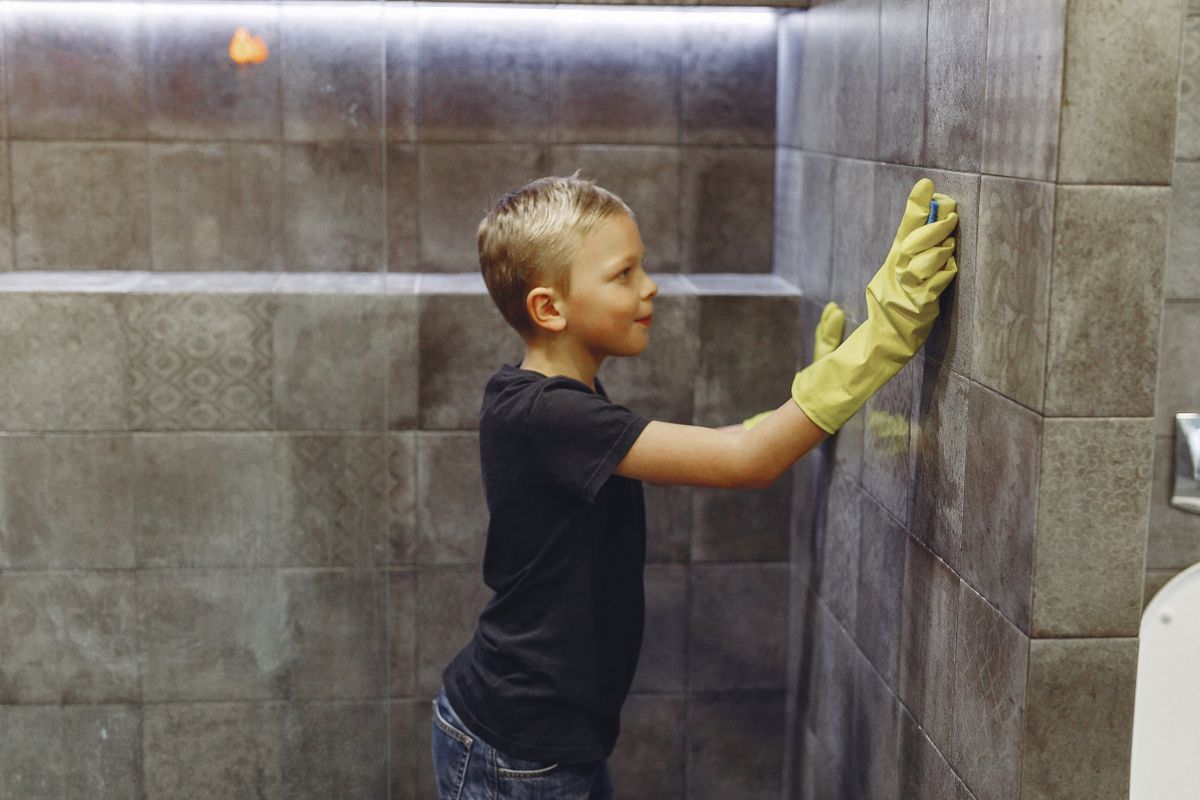
Step 2: Clean Hard Surfaces Safely
- Protect yourself. EPA lists gloves, goggles and an N-95 respirator for small cleanups, and recommends long gloves; natural rubber, neoprene, nitrile, polyurethane or PVC gloves if you use a disinfectant, bleach or strong cleaner.
- Scrub with detergent and water. EPA's guidance for hard surfaces is to scrub mold off with detergent and water and dry completely.
- Never mix cleaners. Mixing bleach with ammonia or acids, including some vinegar-based or toilet-bowl products, can release toxic gases. Use one product at a time, rinse, and ventilate the room.
- Dry everything. Run the fan or open a window until surfaces are fully dry.
White vinegar and hydrogen peroxide products are popular for light surface mold on tile and glass. They can help on non-porous surfaces, but no cleaner reliably reaches mold that has grown into porous grout, caulk or drywall. Follow the label directions on any product, including dwell time and ventilation.
Step 3: Replace What Cannot Be Cleaned
EPA notes that absorbent or porous materials may have to be thrown away if they become moldy, because mold can fill crevices and be difficult or impossible to remove completely. In bathrooms the usual candidates are:
- Caulk. Black spots inside silicone caulk usually mean it needs to be cut out, the joint cleaned and dried, and new mildew-resistant caulk applied.
- Grout. Stains that return after cleaning may need grout removal and regrouting, followed by sealing.
- Drywall and ceiling tiles. Moldy drywall behind a leaking fixture is usually cut out and replaced after the leak is fixed.
EPA also warns not to paint or caulk over moldy surfaces: clean and dry first, because paint applied over mold is likely to peel. Paints labeled as mildew-resistant are designed for damp rooms; read the product label for what it covers.
Step 4: Control Moisture So It Does Not Return
This is the step that makes removal "permanent".
- Keep humidity down. EPA recommends keeping indoor humidity below 60 percent, ideally between 30 and 50 percent, measured with an inexpensive humidity meter.
- Ventilate during and after showers. EPA's bathroom tip is that running a fan or opening a window, and cleaning more often, will usually prevent recurring mold or keep it to a minimum. Check that the exhaust fan vents outdoors, not into the attic, and that it actually moves air (a tissue held to the grille should be pulled toward it).
- Fix leaks quickly. EPA advises fixing plumbing leaks as soon as possible and drying water-damaged areas and items within 24 to 48 hours to prevent mold growth.
- Dry surfaces. A squeegee on shower walls and glass, and leaving the shower door or curtain open, help surfaces dry faster.
- Watch for condensation. EPA notes that condensation on windows, walls or pipes can be a sign of high humidity; dry it and reduce the moisture source.
Costs to Check
Costs depend on the size of the area, what needs replacing and where you live, so get the figures for your own job rather than relying on averages.
| Item | What drives the cost | How to price it |
|---|---|---|
| Cleaning supplies and protective gear | Products and gear you choose | Store shelf price |
| Recaulking or regrouting | Length of joints, DIY or hired | Materials list or handyman quote |
| Exhaust fan repair or upgrade | Ducting to the outside, electrical work | Electrician or contractor quote |
| Leak repair | Where the leak is and access | Plumber quote |
| Professional remediation | Area affected, hidden damage, containment | Several written quotes; ask what guidelines they follow |
If you hire a contractor, EPA suggests choosing one with mold cleanup experience, checking references, and asking them to follow EPA's remediation guidance or other professional or government guidelines.
A Simple Maintenance Routine
- After every shower: fan on until the room is dry, squeegee the walls, leave the curtain or door open.
- Weekly: clean shower surfaces and wipe window sills and corners where water collects.
- Monthly: check caulk and grout for early spots, and check under the sink and around the toilet base for leaks.
- Seasonally: check the humidity level, clean the fan grille, and confirm the fan still vents outside.
Frequently Asked Questions
Is bleach the best way to kill bathroom mold?
EPA's basic advice for hard surfaces is detergent and water, then thorough drying. If you choose to use bleach, use it alone, never mixed with other cleaners, with gloves and ventilation. No cleaner fixes mold growing inside porous materials.
Why does mold keep coming back in the shower?
Usually because the room stays damp. EPA notes that places that are always damp are hard to keep completely free of mold, and that better ventilation and more frequent cleaning usually keep it to a minimum.
Can I paint over bathroom mold?
No. EPA advises cleaning and drying first; paint over mold is likely to peel.
When should I call a professional?
When the area is larger than about 10 square feet, after major water damage or sewage contamination, if the heating and air system may be affected, or if you have health concerns.
Sources and References
- U.S. Environmental Protection Agency, A Brief Guide to Mold, Moisture and Your Home — 10 square feet guideline, humidity below 60 percent (ideally 30–50 percent), drying within 24–48 hours, protective gear, porous materials, painting (read October 9, 2026).