Direct answer
Under current regulations for the SAVE student loan repayment plan, interest capitalization is strictly limited compared to older repayment models. When a borrower enters an authorized forbearance under the SAVE program, unpaid interest generally does not add to the principal balance during that specific forbearance window. That said, exiting the SAVE plan or transitioning to a different repayment strategy can trigger capitalization events. The fastest way to confirm your current interest status is to log into your federal student aid dashboard and review your monthly loan statements for any unapplied interest accruals. This rules out hidden principal growth while you remain in the protected forbearance status.

What this usually means
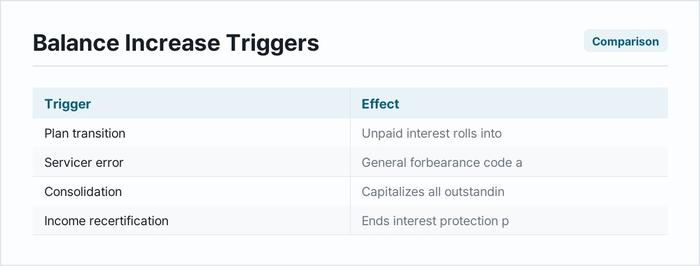
Unexplained balance increases during forbearance usually stem from one of a few specific administrative triggers. The most common cause is a transition between repayment plans, where accumulated unpaid interest rolls into the principal balance upon leaving the SAVE framework. Another frequent trigger is an administrative misclassification where a loan servicer inadvertently applies a general forbearance code instead of the specialized SAVE forbearance code, altering the standard capitalization rules. Also, consolidation of federal loans will always capitalize all outstanding interest regardless of the underlying repayment plan. Finally, failing to recertify income on time can push a borrower out of the eligible SAVE parameters, ending the interest protection period.
What to do, in order
-
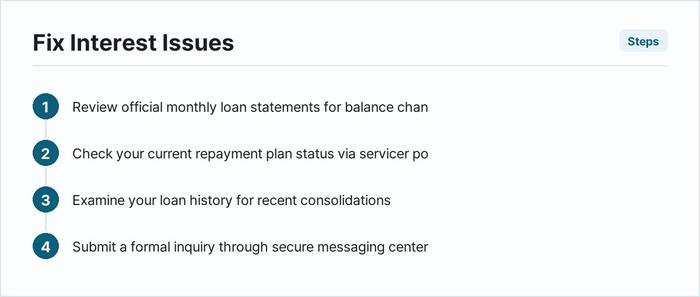
Review your official monthly loan statements. Compare your current principal balance against the balance from the month prior to entering forbearance. This rules out standard monthly interest accrual misreadings.
-
Check your current repayment plan status via your servicer portal. Navigate to Documents > Account Details > Repayment Plan to confirm your active status remains under the SAVE forbearance program. This rules out accidental plan drops caused by system processing errors.
-
Examine your loan history for recent consolidations. Go to Documents > Loan History to verify whether any consolidation requests finalized recently. This rules out mandatory interest capitalization triggered by loan consolidation events.
-
Submit a formal inquiry through your servicer secure messaging center. Request an itemized breakdown of any capitalized interest charges applied since your forbearance began. This rules out incorrect servicer application of general forbearance rules over SAVE-specific regulations.
Quick reference: symptom, likely cause, what to do
| Symptom | Likely cause | What to do |
|---|---|---|
| Balance increases during SAVE forbearance | Transition out of SAVE or loan consolidation | Check plan status history and review recent consolidation documents |
| Interest accumulating on statements | Standard interest accrual vs. capitalization | Verify whether interest is merely accruing or actually added to principal |
| Servicer portal showing generic forbearance | Administrative miscoding by servicer | Submit a secure message requesting immediate status correction |
| Inability to view current loan details | Outdated browser cache or app glitch | Clear browser cache or log in from a secondary device |
| Unexpected lump sum added to principal | Leaving the SAVE plan for standard repayment | Review the terms of your plan switch confirmation |
| Missing forbearance protection notice | Income recertification deadline lapse | Update your adjusted gross income immediately |
How to keep it from happening again
Preventing unexpected interest capitalization requires proactive management of your federal student aid profile. Maintain strict calendar alerts for your annual income recertification deadlines to avoid falling out of eligible SAVE plan parameters. Avoid submitting voluntary loan consolidation applications unless absolutely necessary, as consolidation forces immediate interest capitalization across all included federal loans. Monitor your loan servicer communications via email and postal mail to catch any administrative plan changes before they take effect. Regularly download and archive your monthly billing statements to maintain an independent paper trail of your principal and interest balances throughout the forbearance period.
What triggers interest capitalization on the SAVE plan?
Interest capitalization on the SAVE plan typically triggers when a borrower voluntarily leaves the plan, switches to a different repayment strategy, or consolidates their federal student loans.
Does forbearance automatically capitalize unpaid interest?
No. Under specialized SAVE plan forbearance rules, unpaid interest does not automatically capitalize during the designated administrative forbearance period, unlike older general forbearances.
How can borrowers check if interest was capitalized?
Borrowers can review their official monthly loan statements and compare their principal balances against previous months by checking their account document history online.
Are administrative forbearances treated differently than discretionary ones?
Yes. Administrative forbearances tied directly to SAVE program directives follow strict consumer protection rules that limit interest capitalization compared to discretionary forbearances requested by the borrower.
What happens to unpaid interest if a borrower switches repayment plans?
When a borrower officially exits the SAVE plan to enter a standard or alternative repayment plan, any accumulated unpaid interest capitalizes and adds directly to the principal balance.
How to Check Your Account Status and Interest Accrual
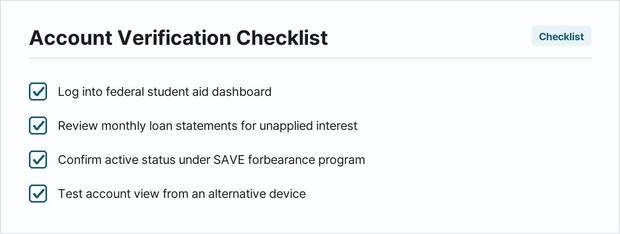
Verifying how interest is being handled on your SAVE plan forbearance requires a careful review of your federal student loan servicer online portal. Borrowers should navigate to the loan details section to inspect the current status code assigned to each specific loan. Look for status indicators that explicitly mention administrative forbearance related to SAVE litigation or recalculations. Compare the current principal balance listed on your most recent monthly statement against the balance from before the forbearance began. In many cases, standard interest may continue to accrue daily based on your loan's promissory note, but the critical factor is whether that interest is scheduled for capitalization upon exiting the forbearance period. Review the billing history and amortization schedules provided online to identify any unexpected jumps in your principal balance. Common mistakes include confusing the accumulation of interest with actual capitalization, as well as assuming that all loans in a multi-loan consolidation group share the exact same forbearance terms. You must check each individual loan separately because different loan types, such as Direct Subsidized versus Direct Unsubsidized, handle interest differently during periods of non-payment. What to do in each situation depends entirely on what your account history reveals: if you notice interest being added to the principal improperly, document the discrepancy with screenshots and prepare to contact your servicer for clarification. Keeping a detailed paper trail of every statement during the forbearance period ensures you have concrete evidence if a dispute arises regarding improper interest capitalization once normal repayment operations resume.
What to Compare Between Servicer Statements and Federal Guidelines
Evaluating your servicer statements against published federal student aid regulations is a vital step in protecting your financial standing during the SAVE plan forbearance. Start by obtaining a copy of your official loan data file from the central federal student aid website and comparing the recorded interest rates and capitalization triggers against the lines itemized on your monthly servicer bills. Look for discrepancies in how administrative forbearance rules are applied to your specific account tier. You should compare the following elements across your documents to ensure total consistency:
- The exact start and end dates of your administrative forbearance period as listed federally versus by your servicer.
- The categorization of your loans to verify whether subsidies that prevent interest growth are still being correctly applied.
- The specific wording used on your billing statements regarding future capitalization events versus federal relief guarantees.
- The historical record of payments made immediately prior to the forbearance implementation to check for retroactive adjustments.
A common mistake during this comparison phase is relying solely on automated notification emails from the servicer without cross-referencing the official federal database. Servicers occasionally experience administrative lag in updating their internal platforms to reflect overarching Department of Education policy mandates. If your comparison reveals a mismatch between what federal guidelines promise and what your servicer statements indicate, you must take proactive measures. Contact your servicer explicitly referencing the federal directives regarding SAVE plan forbearance protections. Ask them to perform a manual audit of your account to reconcile any conflicting figures before the forbearance concludes and regular billing cycles are reinstated.
What to Do in Each Situation to Prevent Improper Capitalization
Navigating the transition out of the SAVE plan forbearance requires a strategic approach depending on your current account standing and the specific communications you receive from your loan provider. If your account shows standard interest accrual without immediate capitalization threats, the best course of action is to monitor monthly statements closely and maintain a record of all forbearance notices. Conversely, if you receive notification that interest is about to capitalize or if you spot an unauthorized principal increase, you must act swiftly to dispute the action. Below is a breakdown of what actions to take based on the specific situation you encounter:
| Account Situation | Immediate Action Required | Follow-Up Step |
|---|---|---|
| Interest accruing normally without capitalization | Save monthly statements digitally and track the total accumulated interest balance. | Check federal guidance weekly for updates on permanent SAVE plan litigation resolutions. |
| Notice of impending interest capitalization | File a formal dispute ticket with your loan servicer citing administrative forbearance rules. | Escalate the complaint to the federal student aid ombudsman if the servicer fails to correct the error. |
| Incorrect principal balance increase detected | Request a complete historical ledger of your loan account showing every transaction. | Withhold voluntary payments targeted at the capitalized interest until the servicer provides a written correction. |
Another frequent error is making voluntary payments during the forbearance without specifying how those funds should be applied, which can inadvertently complicate the principal and interest breakdown. Always direct your servicer on how to apply any payments if you choose to pay down interest voluntarily during the pause. By following these structured steps and remaining vigilant about how your servicer handles your account, you can successfully shield your loans from unauthorized capitalization pitfalls.
Disclaimer
This article is general information, not financial, tax or legal advice. Rules, rates and eligibility change and depend on where a reader lives and on their own situation. Figures here are illustrative; confirm current terms with the provider or agency involved, and consult a licensed professional before acting on a decision that carries real money.