A snake outdoors is a snake. A snake that comes into the house is a different dream, and people who search for it usually know that instinctively. The setting is doing something the animal alone does not.
This guide keeps three things apart, because mixing them is what makes most dream content useless: what traditional dream interpretation says, what psychology says, and how the same symbol changes meaning across cultures. Each section says which one it is speaking from. Nothing here predicts events, and no studies or statistics are invented — where a claim comes from a tradition rather than from research, the text says so.
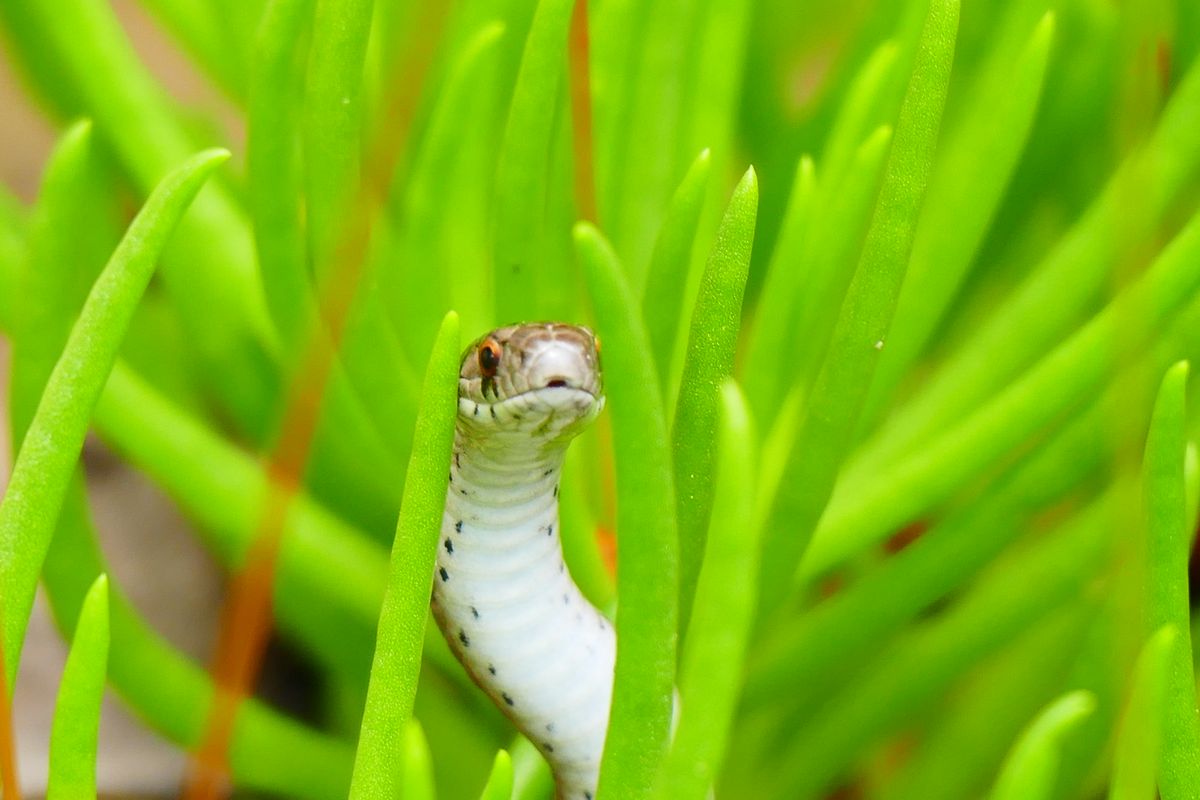
Why the house matters more than the snake
In almost every interpretive tradition, dream settings are read as extensions of the dreamer. A house in particular tends to stand for the self, the family, or the life one has built. That is why a snake in a field and a snake crossing your threshold are handled differently in the old dream books, and why psychologists reading the same dream would also treat the location as meaningful rather than incidental.
So the useful question is not "what do snakes mean." It is: something came in from outside. Everything below is a variation on that.
| Where the snake was | How traditions have read it |
|---|---|
| Outside, at a distance | Something present but not yet involving you |
| At the door or on the step | Approaching. Not yet inside |
| Inside a room | Already part of your life. The strongest version of the dream |
| In the bedroom or bed | Read as the most personal — the private, not the social, self |
| Came in, then left | Passing through rather than staying |
| Hidden somewhere in the house | Present but not yet seen or acknowledged |
1. Traditional dream interpretation
Classical and folk dream books assign fixed meanings to symbols, and they have done so for centuries. They are not a single system — they are many local traditions that frequently disagree. Knowing that is more useful than memorising any one answer.
In the European and Mediterranean dream-book tradition, snakes commonly carry warning and hidden-enemy readings. A snake entering a home was often read as trouble or a person arriving with concealed motives. That reading is old, widespread, and still the default assumption most English-speaking readers bring to the dream.
In East Asian traditions the weighting is close to the opposite. Korean folk interpretation, for instance, connects snakes strongly with wealth and life, and a snake entering the house is frequently read as something good arriving — money, a person, news. A snake coiling around the body is one of the best-known conception-dream motifs there, interpreted as a sign of pregnancy rather than a threat.
| Detail in the dream | Direction the traditions take it |
|---|---|
| Colour: white or golden | Treated as favourable in several East Asian traditions |
| Colour: black | Split. Hidden or not-yet-revealed in some readings, worry in others |
| Snake bites you | Something arriving forcefully; often read as unavoidable |
| You catch or hold the snake | Taking hold of what arrived. Wealth readings are common |
| You kill the snake | Genuinely split: removing a threat, or blocking something that was coming |
| Many snakes | Multiplication — read as abundance in some traditions, as complication in others |
Notice how often the honest answer is "it splits." A site that tells you a black snake entering your house definitively means one thing has quietly picked one strand of one tradition and dropped the rest.

2. What psychology says
Psychological approaches to dreams are doing something different from dream books. They are not trying to tell you what will happen. They are trying to describe what state the dreamer is in.
The psychoanalytic tradition treats dream images as transformed versions of material the waking mind did not process. In that frame the snake matters far less than your reaction to it. The same image can point in opposite directions depending on whether you were terrified, curious, disgusted, or oddly calm.
Analytical psychology treats the snake as one of the symbols that recur across unrelated cultures. Because snakes shed their skin, they attach easily to themes of change and renewal; because they move along the ground, they attach to what lies below conscious awareness. In that frame, "it came into the house" reads as something previously outside your awareness entering the space you actually live in.
Contemporary sleep research takes a third angle again and treats most dream content as a by-product of memory processing — the brain revisiting recent concerns, with striking images emerging from that process rather than being sent as messages.
What all three share is this: none of them treat the dream as a forecast. They read it as information about now.
A checklist you can actually use
Before looking up a symbol, it is usually more productive to answer these:
That last question is the one that tends to produce an actual answer. The "house" framing in the dream often maps onto a real boundary the dreamer is thinking about.
3. The same snake, read differently
Snake dreams are an unusually clear demonstration that symbols are not fixed, because the readings across cultures are not merely different — they are sometimes reversed.
| Tradition | How the snake tends to be read |
|---|---|
| Western Christian-influenced cultures | Temptation and deception. The default negative reading in English |
| Korean and wider East Asian folk tradition | Wealth, life, conception. Frequently favourable |
| Ancient Mediterranean medicine | Healing. The snake-entwined rod survives as a medical emblem |
| South Asian traditions | Sacred serpents appear in religious practice rather than as omens |
This has a practical consequence. If you woke up uneasy, a meaningful share of that unease is not coming from the dream. It is coming from the meaning your culture already attached to snakes before you ever dreamed about one. The same dream, dreamed elsewhere, might have been reported as good news.
Related dreams that are not the same dream
People searching for this often have a slightly different scene in mind, and the traditions treat these separately:
- A snake coiling around your body — the conception-dream reading dominates in East Asian traditions, far more than for snakes generally
- A snake in water — the water condition strengthens the wealth reading in several traditions
- Being chased by a snake — closer to pursuit dreams than to snake dreams; the chase is doing the work
- A dead snake in the house — handled separately again, and split in the same way "killing the snake" is
Deciding which scene you actually dreamed is more useful than reading a general snake entry.
So was it a good dream?
The honest answer is that the question cannot be answered, and the reason is interesting rather than disappointing.
Traditional interpretation does not agree with itself — the readings split by colour, by location, by what the snake did, and by which culture the dream book came from. Psychology does not answer the question at all, because it is not in the forecasting business. And moving between cultures reverses the verdict entirely.
What a guide like this can do is show you which tradition a given reading comes from, so that you can tell the difference between an old symbolic convention and a claim about your life. Keep those apart and dream interpretation is an interesting thing to read. Blend them and it becomes anxiety with no source.
Sources and how to check this yourself
This article cites no studies and no statistics. Dream content online is full of invented figures, and not inventing them is a rule of this series. What follows is where you can check the claims directly.
- Folk and classical dream traditions — encyclopaedias of folklore and mythology carry entries for serpent symbolism across cultures; the Korean readings described here are documented in Korean folklore reference works under the entries for snakes and for dreams
- The medical emblem — the Rod of Asclepius is documented in standard reference works and is the clearest surviving example of a favourable serpent reading in the West
- Psychological frameworks — the difference between psychoanalytic and analytical-psychology approaches to dreams is set out in introductory texts from each tradition. This article described the approach of each, and quotes no individual researcher
- Sleep and memory research — general overviews of sleep science cover the memory-consolidation account of dreaming
What cannot be checked: whether any interpretation is correct. Traditional dream reading is not a body of findings; it is a set of inherited conventions that disagree with one another. This article organises them. It does not adjudicate between them.
Editor's note
Checked: every interpretive claim here is attributed to a tradition or to a psychological framework, and labelled as such. No numbers appear in this article, by design.
Not established: which reading, if any, is correct. Folk interpretation has no standard text and varies by region and by who is telling it.
Check for yourself: folklore reference works for the symbolic traditions, and introductory texts on dreams for the psychological frameworks named above.
Image credits: the photographs in this article are free photos from Pexels, downloaded and hosted on our own server. Photographers: Jani Tisler · Xavier Messina · Михаил Крамор.
Frequently Asked Questions
Is dreaming of a snake in the house a bad omen?
It depends entirely on which tradition you ask. European dream books lean toward warning and hidden enemies; Korean and wider East Asian folk interpretation often reads a snake entering a home favourably, as wealth or news arriving. No tradition is authoritative over the others.
Why does it matter that the snake was inside the house?
Across interpretive traditions a house tends to stand for the self, the family, or the life you have built. That is why a snake outdoors and a snake crossing your threshold are read differently: something came in from outside.
What do psychologists say about snake dreams?
They do not treat dreams as forecasts. Psychoanalytic approaches focus on your reaction rather than the symbol; analytical psychology reads the snake as a recurring image tied to change and to what lies below awareness; sleep research treats most dream content as a by-product of memory processing.
Does the colour of the snake change the meaning?
In several East Asian traditions white and golden snakes are read favourably, while black is genuinely split between 'not yet revealed' and 'worry'. European dream books weight colour much less than the encounter itself.
Should I act on a snake dream?
This guide makes no predictions and recommends no actions. The more useful exercise is the checklist above: what you felt, how close the snake came, what you did, and whether something is currently entering your life from outside.