Most dreams happen to the dreamer. A flying dream is one of the few where the dreamer is doing something, and that difference is the first thing worth noticing. People who look this up rarely want to know what wings mean. They want to know what it means that they were the one in the air.
This guide keeps three things apart, because mixing them is what makes most dream content useless: what traditional dream interpretation says, what psychology says, and how the same image changes meaning across cultures. Each section says which one it is speaking from. Nothing here predicts events, and no studies or statistics are invented — where a claim comes from a tradition rather than from research, the text says so.

The detail that decides the reading
Across almost every interpretive tradition, "I was flying" is not a single dream. The traditions split it by how the flight felt and how much of it the dreamer controlled, and they split it the same way psychologists would: a dream of gliding calmly over a landscape and a dream of barely staying up are not one dream reported twice.
So the useful question is not "what does flying mean." It is: were you in control, and how did it feel? Everything below is a variation on that.
| What the flight was like | How traditions have read it |
|---|---|
| Effortless, steady gliding | The most favourable version almost everywhere — mastery, release, a situation moving in your favour |
| Flapping, straining to stay up | Read as effort without enough support. The goal is right, the means are not yet there |
| Rising very high, then unease | Split. Ambition in some readings, overreach in others — the oldest dream books warn about height |
| Flying low, just above the ground | Usually read as modest but real progress rather than a dramatic change |
| Being carried or pulled through the air | Something outside you is doing the moving. Read as events, people or circumstance, not your own will |
| Starting to fall mid-flight | Handled as a falling dream from that point on, not a flying one. The turn is the content |
| Flying indoors, ceilings in the way | Read as capacity with no room for it — the ability is there, the space is not |
| Others watching from below | Brings in how the dreamer thinks they are seen, which the solitary version does not |
Notice how often the reading hinges on control and on height rather than on flight itself. That is the single most useful thing to take from the traditions: they are not reading the wings.
1. Traditional dream interpretation
Classical and folk dream books assign fixed meanings to symbols, and they have done so for a very long time. They are not one system. They are many local traditions that frequently disagree, and knowing that is more useful than memorising any single answer.
The classical Greco-Roman dream-book tradition treated flying as a serious and generally favourable sign, and — this is the part most modern summaries drop — it cared about *how high*. Moderate flight was read well; flying very high, or flying in a way that drew attention, carried warnings. The same instinct survives in the ordinary English phrase about flying too close to the sun, which comes from the same cultural layer.
In Korean folk interpretation, rising into the air attaches strongly to advancement — promotion, examination success, a change in standing. The direction matters: going up is the favourable part, and a dream that ends with coming down is read differently from one that ends in the air. This is the same logic that makes a snake entering the house a wealth reading in Korean tradition rather than a warning: the tradition reads the *movement*, not just the object.
In the Islamic dream-interpretation tradition, flying has long been connected with travel and with change of station, and the classical commentators attended to whether the flight had a destination. A flight toward somewhere was read differently from aimless hovering.
In shamanic traditions across Siberia, Central Asia and the Americas, flight is not a symbol at all — it is a described practice. The soul travelling while the body stays put is part of the ritual vocabulary, which is why anthropologists use the term "soul flight". A dream of flying lands in a completely different category there than it does in a European dream book.
| Detail in the dream | Direction the traditions take it |
|---|---|
| Flying upward | Advancement and rising standing. The strongest favourable reading in East Asian folk traditions |
| Flying with a clear destination | Travel, or a decision already made. Attended to closely in the classical Islamic tradition |
| Flying without direction | Read as unsettled rather than bad — motion without a goal |
| Flying over water | Water conditions many readings; combined with flight it is usually read as a crossing or transition |
| Flying at night versus daylight | Daylight readings tend to be plainer; night flight attracts hidden-knowledge and soul-travel readings |
| Wings, versus flying with none | Wings bring in borrowed or granted power; flying unaided is read as the dreamer's own capacity |
A site that tells you flying dreams definitively mean one thing has quietly picked one strand of one tradition and dropped the rest.
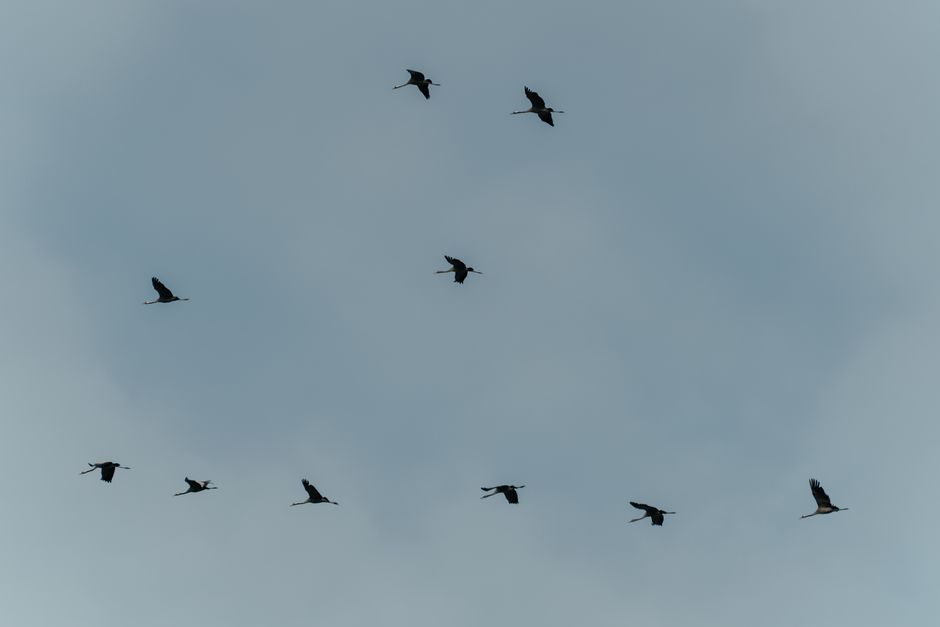
2. What psychology says
Psychological approaches to dreams are doing something different from dream books. They are not trying to tell you what will happen. They are trying to describe what state the dreamer is in.
The psychoanalytic tradition treats dream images as reworked material the waking mind did not finish processing, and it took flying dreams seriously as a class — partly because they are vivid and remembered, partly because they so often carry bodily sensation rather than story. In that frame, what the flight *felt* like in the body matters more than where it went.
Analytical psychology reads height with suspicion as well as admiration. Seeing from above is a real change of perspective, and it is also a way of not being on the ground. The same dream can describe a genuine widening of view or a detachment from the ordinary business of a life, and the tradition does not pretend one reading always wins.
Contemporary sleep and dream research takes a third angle entirely. Flying is one of the actions most often reported by people who become aware they are dreaming — so often that it is a standard element in accounts of lucid dreaming rather than an unusual one. Researchers in that area generally treat it as a by-product of how the dreaming brain models a body: during the dreaming phase of sleep, the sleeping body is largely immobilised and receives almost no information about contact with the ground. A model of a body with no floor under it is, functionally, a model of a body in the air.
What all three share is this: none of them treat the dream as a forecast. They read it as information about now.
A checklist you can actually use
Before looking up a symbol, it is usually more productive to answer these:
That last question is the one that tends to produce an actual answer. Flying dreams cluster around situations where someone is being asked to do something they are not yet sure they can hold up.
3. The same flight, read differently
Flying is an unusually clear demonstration that symbols are not fixed, because the readings across cultures are not merely different — they sit in different categories altogether.
| Tradition | How flight tends to be read |
|---|---|
| Classical Greco-Roman dream books | Favourable, with explicit warnings attached to excessive height |
| Korean and wider East Asian folk tradition | Rising standing — promotion, success, advancement |
| Classical Islamic interpretation | Travel and change of station; destination matters |
| Siberian, Central Asian and American shamanic traditions | Not a symbol — a described practice of soul travel |
| Modern Western popular interpretation | Freedom and escape, the reading most English-language readers arrive with |
This has a practical consequence. The feeling you woke up with is partly the dream and partly the meaning your culture attached to flying before you ever dreamed it. A reader raised on "flying means freedom" and a reader raised on "flying means promotion" have had the same dream and will report two different experiences of it.

Flying and falling are not opposites
They get filed together because both involve height, but the traditions treat them as different dreams, and so does the checklist above.
A falling dream is something happening *to* the dreamer. A flying dream is something the dreamer is *doing*. That is why the most informative version of the dream is the one that turns — flight that becomes a fall, or a fall that the dreamer manages to pull out of. In both cases the content is the turn, not the height. If your dream changed direction partway through, read it from the turn.
Related dreams that are not the same dream
People searching for this often have a slightly different scene in mind, and the traditions handle these separately:
- Floating rather than flying — no propulsion and no destination; read as suspension, closer to waiting dreams than to flight
- Flying in a vehicle or aircraft — the dreamer is a passenger, which moves the reading toward being carried by circumstance
- Jumping and staying up longer than you should — treated as a half-flight, and usually read as something being tested rather than possessed
- Being unable to get off the ground — read as the inverse of the flying dream and usually the more uncomfortable one to wake from
Deciding which one you actually dreamed is more useful than reading a general entry on flight.
So was it a good dream?
The honest answer is that the question cannot be settled, and the reason is more interesting than disappointing.
Traditional interpretation does not agree with itself — the readings split by height, by control, by direction, and by which culture the dream book came from, and the oldest traditions attached warnings to exactly the version modern readers find most thrilling. Psychology does not answer the question at all, because it is not in the forecasting business. And moving between cultures does not just change the verdict, it changes the category.
What a guide like this can do is show you which tradition a given reading comes from, so you can tell the difference between an inherited symbolic convention and a claim about your life. Keep those apart and dream interpretation is an interesting thing to read. Blend them and it becomes anxiety with no source.
Sources: where these traditions are documented
Source material reviewed as of 2026-10-05. This article cites no studies and no statistics, and the list below is where to look, not a line-by-line citation — each entry is the standard work or body of reference in which the tradition described above is documented. Dream content online is full of invented figures, and not inventing them is a rule of this series. What follows is where the claims can be checked directly.
- Classical dream books — the Greco-Roman tradition is carried above all by Artemidorus's *Oneirocritica* (2nd century), available in standard scholarly translations; the attention that tradition pays to the *height* of a flight is visible in the text itself
- Korean folk interpretation — Korean folklore reference works, the Encyclopedia of Korean Culture (한국민족문화대백과사전) among them, carry entries for dreams and for flight; the advancement reading belongs to that body of material
- Classical Islamic interpretation — the Arabic dream-interpretation tradition is associated above all with the name of Ibn Sirin and is covered in reference works on Islamic intellectual history and in translated collections
- Soul flight — the term comes from the anthropology of shamanism, where Mircea Eliade's *Shamanism: Archaic Techniques of Ecstasy* is the standard general reference
- Psychological frameworks — the psychoanalytic approach is set out in Freud's *The Interpretation of Dreams* and the analytical-psychology approach in Jung's writing on dreams; introductory texts from each tradition cover both. This article described the approach of each and quotes neither
- Lucid dreaming and REM — general overviews of sleep science cover both the loss of muscle tone during REM sleep and the commonly reported content of lucid dreams
What cannot be checked: whether any interpretation is correct. Traditional dream reading is not a body of findings; it is a set of inherited conventions that disagree with one another. This article organises them. It does not adjudicate between them.
Editor's note
Checked (reviewed as of 2026-10-05): every interpretive claim here is attributed to a tradition or to a psychological framework, and labelled as such. No numbers or percentages appear in this article, by design — including for how often flying appears in lucid dreams, which is described in words rather than given a figure we cannot source.
Not established: which reading, if any, is correct. Folk interpretation has no standard text and varies by region and by who is telling it. The classical sources named here are traditions of interpretation, not research findings.
Check for yourself: folklore and reference works for the symbolic traditions, translated classical dream texts for the Greco-Roman and Arabic material, and introductory texts on dreams for the psychological frameworks named above.
Image credits: the photographs in this article are free photos from Pexels, downloaded and hosted on our own server. Photographers: Brett Sayles · Ali Arapoğlu · David Geib.
Frequently Asked Questions
Is a flying dream a good sign?
It depends on which tradition is answering, and the traditions do not agree. The classical dream books read moderate, controlled flight favourably but attached warnings to flying very high. East Asian folk interpretation reads rising as advancement. Psychological approaches do not answer the question at all, because they describe the dreamer's present state rather than predicting events.
Why do some flying dreams take effort to stay up?
Traditions generally read straining flight as effort without enough support behind it — the aim is right, the means are not yet there. It is treated as a different dream from effortless gliding, not a weaker version of it.
What does it mean if the flying turns into falling?
The turn is treated as the content. From the moment the flight fails it is handled as a falling dream, and interpretations attend to whether the dreamer pulled out of it or hit the ground. A dream that changes direction is read from the change.
Are flying dreams connected to lucid dreaming?
Flying is one of the actions most commonly reported by people who become aware they are dreaming, which is why it appears so often in accounts of lucid dreaming. That is a description of what gets reported, not a claim that a flying dream means the dreamer was lucid.
Does flying with wings mean something different from flying without them?
In several traditions, yes. Wings bring in the idea of granted or borrowed power, while flying unaided is read as the dreamer's own capacity. Readers who remember wings and readers who do not are describing two different dreams in those systems.