Seoul sells an unlimited-ride transit pass called the Climate Card, and the arithmetic on whether it is worth buying is simple enough that you should do it yourself rather than trust a number someone else calculated. This guide gives you the published prices with the date Seoul states them, the coverage limits in the city's own words, and the division.
There is also one condition that catches most visitors on day one, and it is near the top of this page rather than buried, because it decides whether the pass is useful to you at all.
Every figure below is quoted from Seoul's official English page with the date that page states. Korean transit prices change, and several English guides are running on older numbers.
The condition that decides it
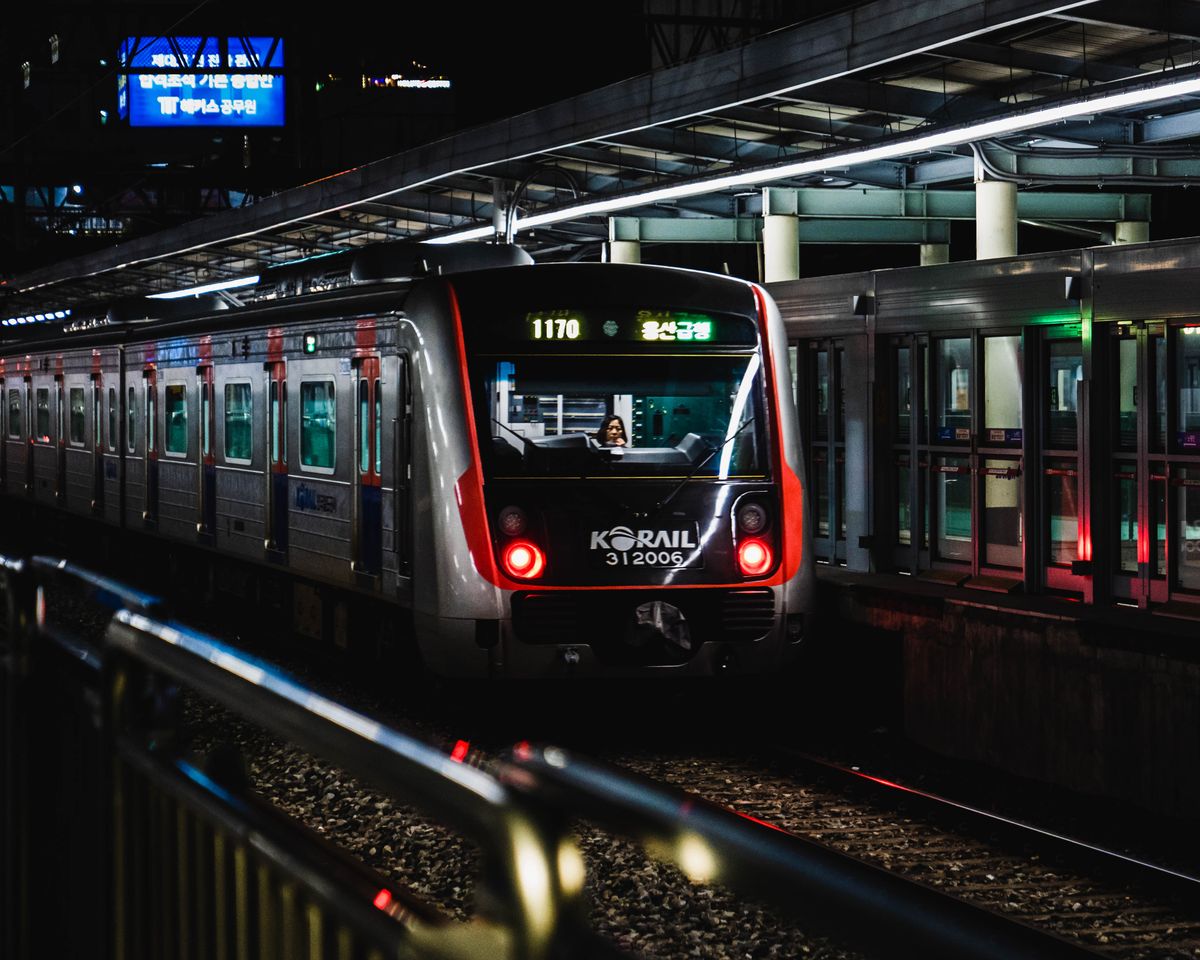
The Climate Card does include the AREX airport railroad — and since 13 September 2024 you can get off at Incheon Airport Terminal 1 and Terminal 2. What you cannot do is board the train there. That asymmetry is the whole point: the pass covers the ride out to the airport, but not the ride in from it. You will pay for the inbound leg separately regardless of holding the pass.
If your plan was "land, buy the pass, ride in" — that plan does not work. Buy the pass after you are in the city.
Two further limits from the same official page:
- The card covers Seoul-based subway lines plus some Gyeonggi-serviced routes, and Seoul-licensed city and town buses. A bus licensed by a neighbouring city is not automatically included.
- The Shinbundang Line is excluded. If your daily route depends on it, the pass will not cover that segment.
What it costs
Prices as stated by the Seoul Metropolitan Government, as of September 2025:
| Pass | Price | What the extra buys |
|---|---|---|
| 30 days, transit only | 62,000 won | Subway and bus within the coverage above |
| 30 days, with Ttareungi | 65,000 won | Adds Seoul's public bike share |
| 30 days, with Hangang Bus | 67,000 won | Adds the Han River boat service |
| 30 days, with both | 70,000 won | Bikes and the river boat |
| 1 day | 5,000 won | Short-term tier |
| 2 days | 8,000 won | Short-term tier |
| 3 days | 10,000 won | Short-term tier |
| 5 days | 15,000 won | Short-term tier |
| 7 days | 20,000 won | Short-term tier |
A physical card costs 3,000 won on top, bought separately. That is a one-off, not part of the pass price.
Do the division yourself
The honest way to decide is to divide the pass price by what a single ride costs you. Seoul's adult subway fare with a transportation card is 1,550 won as of 28 June 2025.
| Pass | Price ÷ 1,550 | Rides needed to break even |
|---|---|---|
| 1 day — 5,000 won | 5,000 ÷ 1,550 | about 4 rides |
| 3 days — 10,000 won | 10,000 ÷ 1,550 | about 7 rides, roughly 2–3 a day |
| 7 days — 20,000 won | 20,000 ÷ 1,550 | about 13 rides, roughly 2 a day |
| 30 days — 62,000 won | 62,000 ÷ 1,550 | about 40 rides, roughly 2 a day on 20 days |
Two things fall out of that table.
A daily commuter clears the monthly pass easily. Two rides a day on twenty working days is exactly 40 rides, and most people also travel at weekends. For anyone living in Seoul and using the subway to get to work, the 62,000 won pass is cheaper than paying per ride.
A visitor doing a normal amount of sightseeing is close to the line, not clearly over it. Roughly two rides a day is the break-even on every short-term tier, so the pass wins if you are moving around a lot and loses if you walk between places or take a taxi in the evening. Buses complicate it in your favour slightly, since bus fares differ from subway fares.
The per-day price, which the table does not show
The tiers are not priced proportionally, and dividing each one by its own length shows which is the bargain.
| Pass | Price ÷ days | Cost per day |
|---|---|---|
| 1 day | 5,000 ÷ 1 | 5,000 won |
| 2 days | 8,000 ÷ 2 | 4,000 won |
| 3 days | 10,000 ÷ 3 | about 3,333 won |
| 5 days | 15,000 ÷ 5 | 3,000 won |
| 7 days | 20,000 ÷ 7 | about 2,857 won |
| 30 days | 62,000 ÷ 30 | about 2,067 won |
The per-day price falls steadily as the tier gets longer, and the 1-day pass is the worst value by a wide margin — it costs almost twice per day what the 7-day pass costs. That matters for a specific decision: if you are in Seoul for four days, the 5-day pass is cheaper than a 3-day plus a 1-day (15,000 against 15,000 for the same coverage, with a spare day). And if you are here for six days, the 7-day pass costs 20,000 against 25,000 for a 5-day plus two 1-day passes.
Work out your own case the same way. The rule that falls out of the table is: round up to the next tier rather than stacking short passes.
The add-ons, priced per day
The three upgrades are flat amounts on top of the 62,000 won transit pass, so their real cost is also a division.
| Upgrade | Extra over 30 days | Extra per day | What you get |
|---|---|---|---|
| Ttareungi (public bikes) | 3,000 won | 100 won | Seoul's bike share |
| Hangang Bus | 5,000 won | about 167 won | The Han River boat service |
| Both | 8,000 won | about 267 won | Bikes and the boat |
At 100 won a day, the bike upgrade pays for itself if you use a shared bike even a few times in a month, which is why it is the one most commuters add. The river boat upgrade is a different kind of purchase — it is not a commuting tool, so treat it as paying 5,000 won for a month of optional river trips rather than as a transport saving.
Three realistic cases
Putting the division to work on patterns rather than on abstractions.
| Who you are | Rides in the period | Pay per ride | Pass | Which wins |
|---|---|---|---|---|
| Commuting in Seoul, five days a week | about 44 a month, before weekends | about 68,000 won | 62,000 won | The pass, and the gap widens with weekend travel |
| Visiting for five days, three rides a day | 15 | about 23,000 won | 15,000 won | The pass, clearly |
| Visiting for five days, mostly walking | 5 | about 7,800 won | 15,000 won | Pay per ride |
The pattern that decides it is not how long you are staying — it is how many times a day you tap. Two rides a day is the line on every tier. Below that, pay as you go; above it, buy the pass.
One caveat on the middle and bottom rows: these use the subway fare. Bus fares differ, and a journey that combines both may cost more per trip than the single-fare figure used here, which shifts the comparison slightly toward the pass.
A short checklist before you buy
The short-term passes start when you charge them
This is the second condition that costs people money.
Short-term passes begin on the date you charge the card, not the day you first tap it. If you buy a 3-day pass on the evening you arrive and do not travel until the next morning, you have spent one of the three days sleeping.
The practical rule: charge a short-term pass on the morning of your first full day of travel, not when you land.
Who should not buy it
A guide that only tells you when to buy is half a guide.
- If you are going straight from Incheon Airport into the city — the pass does not cover that leg. See the condition at the top.
- If your route uses the Shinbundang Line — excluded. You would pay for that segment on top.
- If you are commuting in from a neighbouring city on a bus licensed there — not automatically covered.
- If you walk most places and take two or three rides a week — you will not reach the break-even on any tier.
- If you are here for two days and arriving in the evening — the charge-date rule eats a disproportionate share of a short pass.
What you need before any of this works
The Climate Card is a pass loaded onto a card. If you do not yet have a transportation card, or you are not sure where to buy and recharge one, that is covered separately in our guide to the T-money card — card prices, where to buy, the top-up ceiling, and how refunds work. This page does not repeat that; it assumes you have a card in hand.
What this guide does not tell you
Being explicit about the gaps, because a guide that pretends to be complete is the kind that gets a detail wrong.
- Transfer discounts. Seoul has a free-transfer system between subway and bus. The only official English page we found stating the exact rules is a page that is also showing outdated fares, so we are not quoting numbers from it.
- Whether the pass is refundable, and on what terms. The official page we used does not state refund conditions for the Climate Card, so we do not state them either.
- Exactly which Gyeonggi routes are included. The city's wording is "partial Gyeonggi-serviced subway routes" and we have not found a station-level list in English.
- Whether a non-resident can buy the 30-day pass. The page notes that an upcoming separate product will be limited to Seoul residents, but it does not restrict the current card by residency. We are not inferring a rule from the absence of one.
Why the arithmetic is shown rather than summarised
Most English guides to this pass give you a verdict — "worth it for tourists", "only for commuters" — without the numbers behind it. The trouble with a verdict is that it hides the one variable that actually decides the answer, which is how often you travel, and that is different for every reader.
Both numbers used above are published by the city: the pass prices on its Climate Card page, the 1,550 won adult subway fare on its subway page. Dividing one by the other is something you can repeat in ten seconds, and it will still be correct after a price change, which a verdict will not be. That is why this page shows the division instead of the conclusion.
Editor's note
Checked (reviewed as of 2026-10-05): every price and coverage statement here is quoted from the Seoul Metropolitan Government's English Climate Card page, which states its information as of September 2025. The subway fare used in the division is from the city's own subway page, as of 28 June 2025. The break-even figures are plain division of those two published numbers, shown so you can repeat them.
Not established: the four items listed in the section above. They are left blank rather than filled in from secondary sources.
A note on other guides: some official English pages still show older Seoul fares — the city's transport overview page lists the subway at 1,400 won while its dedicated subway page lists 1,550. Where they disagree, the dedicated pages are current, and this guide uses those.
Sources
- Climate Card prices, coverage, the AREX condition and the charge-date rule — Seoul Metropolitan Government: https://english.seoul.go.kr/policy/transportation/climate-card/ (as of September 2025)
- Adult subway fare used for the break-even division — Seoul Metropolitan Government, Subway: https://english.seoul.go.kr/policy/transportation/modes-of-transport/subway/ (as of 28 June 2025)
Frequently Asked Questions
Does the Climate Card work at Incheon Airport?
In one direction. Seoul's official page states that since 13 September 2024 you can get off at Terminal 1 and Terminal 2 with the card — but you cannot board the train there. So it covers the trip out to the airport and not the trip from the airport into the city. Buy the pass once you are in the city, not on arrival.
How many rides does the 30-day Climate Card need to pay off?
Dividing the published figures, 62,000 won at the 1,550 won adult subway fare is about 40 rides. Two rides a day on twenty days reaches that, so a daily commuter clears it comfortably and a short visit generally does not.
When does a short-term Climate Card pass start?
On the date you charge the card, not the day you first tap it. A 3-day pass bought on arrival evening has already used one of its days by the next morning, so charge it on the morning of your first full day of travel.
Which lines and buses are not covered?
The Shinbundang Line is excluded. Coverage is Seoul-based subway lines plus some Gyeonggi-serviced routes, and Seoul-licensed city and town buses — a bus licensed by a neighbouring city is not automatically included.
Do I need a separate card, or is the Climate Card itself the card?
A physical Climate Card costs 3,000 won and is bought separately from the pass price. The pass is loaded onto it. If you do not already have a transportation card, that is covered in our separate guide to the T-money card.