The September Travel Paradox
September is arguably the most rewarding month of the year for independent travel. The peak summer crowds have thinned across the Mediterranean, national parks in North America return to a semblance of peace, and cities from Tokyo to Edinburgh settle into a more authentic rhythm. Yet, this golden window comes with a distinct logistical challenge: September is a meteorological chameleon. You might bask in thirty-degree sunshine during the afternoon only to shiver through a ten-degree drop when the sun dips below the horizon.
For the traveler, this means that traditional summer packing lists fail completely, and full winter gear is entirely unnecessary weight. Success in September requires a shift in philosophy away from static outfits and toward modular dressing. You are packing for two distinct seasons within the exact same twenty-four-hour cycle. Understanding how to bridge this gap without checking a bag is the defining skill of shoulder-season travel.
The Core Decision Rules for Modular Packing
When curating a wardrobe for a trip that spans shifting temperatures, avoid the trap of packing single-use garments. Every item you pack should ideally serve multiple functions across different temperature bands. The foundation of this approach is layering logic, which relies on three distinct layers that can be added or subtracted as the day evolves.
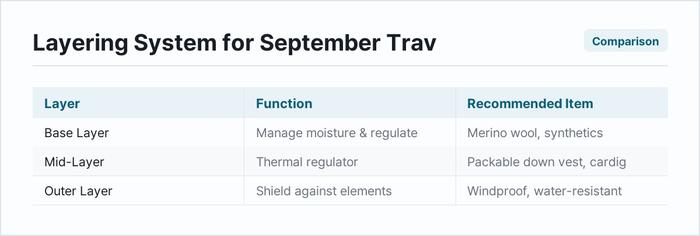
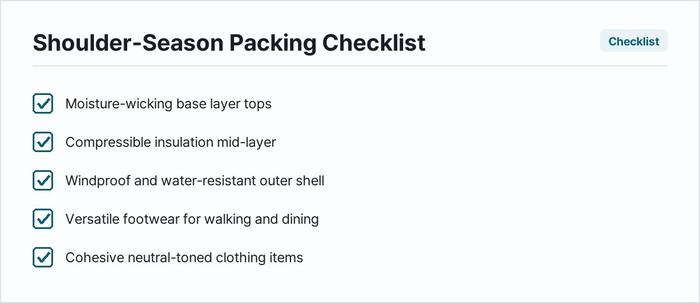
The base layer must manage moisture and regulate temperature. Skip heavy cotton t-shirts that hold sweat and chill you when the wind picks up. Instead, look for lightweight merino wool or technical synthetic blends that breathe during warm afternoon city walks and provide insulation when the evening air cools down. This layer sits directly against your skin and sets your baseline comfort.
The mid-layer is your thermal regulator. This is where most travelers make mistakes by bringing bulky fleece jackets that consume half a suitcase. A better approach uses compressible insulation, such as a lightweight packable down vest or a tightly woven wool cardigan. These items trap body heat efficiently while compressing into a fraction of the space, ready to be deployed the moment shade covers the piazza or you ascend to a higher altitude.
The outer layer is your shield against the elements. September weather is notoriously fickle, bringing sudden mountain squalls, coastal gales, or unexpected afternoon thunderstorms. Your outer layer needs to be windproof and water-resistant at a minimum, and fully waterproof if you are heading into regions with high precipitation risks. Crucially, it must be roomy enough to fit comfortably over your mid-layer without restricting movement.
The One-Bag Philosophy for Shoulder Season
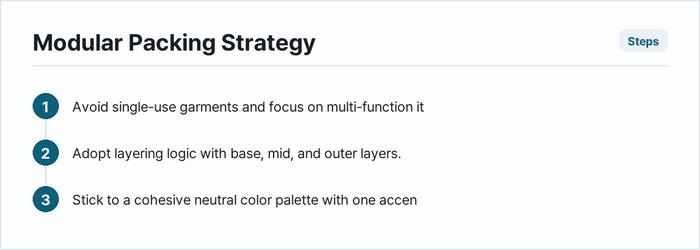
Traveling light in September is entirely feasible if you embrace the one-bag mindset. Because you are dressing in layers rather than bulky garments, your physical volume remains manageable. The secret lies in a strict color palette. Stick to a cohesive range of neutral tones—such as navy, charcoal, olive, or beige—supplemented by a single accent color. This ensures that every top matches every bottom, exponentially increasing your outfit combinations without increasing your luggage count.
Footwear is typically the heaviest and bulkiest part of any travel bag, and September trips can test your shoe strategy severely. You need footwear that handles cobblestones, long walking tours, and potentially damp pathways, while still looking acceptable for a quiet dinner. Limit yourself to two pairs of shoes maximum. Wear your heaviest, most supportive walking shoes on travel days, and pack a lighter, versatile pair—such as leather loafers or clean minimalist sneakers—in your bag. Never pack shoes 'just in case'; every pair must earn its place.
Regional Climate Realities and Rain Thresholds
Weather in September varies wildly depending on your latitude and geography. Southern Europe still experiences true summer heat, particularly around the Mediterranean basin, but evenings by the coast can turn brisk quickly. Conversely, destinations like the Scottish Highlands or the Alps are already transitioning into brisk autumn, where morning frosts are entirely normal.
Rain gear thresholds must be adjusted regionally. In Western Europe, a lightweight, breathable rain shell stored in your daypack is sufficient for passing autumn showers. In contrast, regions experiencing their seasonal weather shifts require a more solid approach. September is a peak month for tropical storm activity in certain parts of the world, making regional awareness critical for both comfort and safety.
Shoulder-Season Booking Timing and Strategy
Timing your bookings for September requires balancing availability with value. While the general rule for peak summer is to book many months in advance, shoulder-season travel allows for a slightly more flexible approach, though prime properties still fill up fast due to conventions and regional festivals.
For accommodations, aim to lock in your stays about three to five months ahead if you are visiting high-demand cultural hubs like Florence, Kyoto, or Munich during Oktoberfest. But if you are exploring rural regions or driving through wine country, booking windows can often shrink to a couple of months without sacrificing quality.
Transportation follows a similar logic. Regional trains and ferries generally maintain their summer schedules through most of September, making spontaneous day trips straightforward. For flights, monitor pricing trends about four to six months out, pulling the trigger when fares drop below historical averages for your specific route.
Managing Weather Risks: Insurance and Contingency Planning
Because September coincides with dynamic weather patterns across the globe, travel insurance is not merely an optional add-on; it is an essential component of your planning toolkit. Different regions face distinct seasonal hazards that require specific policy considerations.
If your travels take you to the Caribbean, the Gulf of Mexico, or parts of the Southern United States, September falls squarely within the active window for tropical storms and hurricanes. Policies purchased for these destinations must include solid trip interruption and cancellation coverage that explicitly accounts for named storms. Read the fine print to ensure that your policy covers delays caused by airline groundings or resort evacuations.
Similarly, travelers heading to East Asia—including coastal China, Taiwan, Japan, and parts of the Philippines—must navigate the peak of the regional typhoon season. High winds and torrential downpours can disrupt bullet train networks and ground domestic flights with little warning. Ensure your insurance covers travel delays that necessitate unexpected hotel stays or alternative routing.
Beyond insurance, build buffer days into your itinerary. Never schedule a tight international connection on the same day you rely on a regional ferry or domestic flight during September. Giving yourself a twenty-four-hour cushion prevents a localized weather event from derailing your entire journey.
Regional Weather and Packing Breakdown
| Region | Day Temp | Night Temp | Rain Risk | What That Means for Packing |
|---|---|---|---|---|
| Southern Europe (Mediterranean) | 25°C to 30°C | 15°C to 18°C | Low to Moderate | Pack breathable fabrics for daytime exploration, but include a light jacket or cardigan for breezy coastal evenings. |
| Northern & Central Europe | 15°C to 20°C | 8°C to 12°C | Moderate | Prioritize versatile mid-layers, a windproof outer shell, and closed-toe walking shoes suitable for damp cobblestones. |
| East Asia (Japan, South Korea) | 22°C to 28°C | 16°C to 20°C | Moderate to High | Bring quick-dry clothing, a reliable compact umbrella, and monitor regional forecasts for potential late-season typhoons. |
| North American National Parks | 18°C to 24°C | 2°C to 8°C | Low | Pack thermal base layers and a warm insulating jacket because mountain night temperatures can easily approach freezing. |
| Caribbean & Gulf Coast | 28°C to 32°C | 24°C to 26°C | High | Focus on light tropical wear, quick-drying swimwear, and ensure your travel insurance covers named storm disruptions. |
Navigating September Festivals and Cultural Events
September hosts some of the world's most enduring cultural celebrations, from the grape harvests across French and Italian wine regions to historic film festivals in Venice and Toronto, alongside the start of Oktoberfest in Munich. Because these events draw significant crowds, preparation is vital.
Festival dates often shift slightly depending on the year. For instance, Oktoberfest typically begins in mid-September and runs into the first week of October, while historic wine harvest celebrations are dictated entirely by the ripeness of the grapes. Always confirm exact dates on official tourism websites before finalizing your travel arrangements.
When packing for festival-heavy itineraries, versatility remains your greatest asset. You want clothing that allows you to transition smoothly from daytime historic tours to festive evening celebrations without returning to your accommodation to change. Simple accessories, such as a stylish scarf or a change of footwear, can instantly elevate a daytime travel outfit into evening-appropriate attire.
Final Thoughts on Shoulder-Season Travel
Traveling in September offers a rare equilibrium: the weather is generally kinder than the blistering heat of July, and the crowds are vastly more manageable. By mastering the art of modular layering, adhering to a disciplined one-bag philosophy, and respecting regional climate realities through smart insurance and flexible planning, you set yourself up for a seamless journey. Embrace the temperature shifts as part of the adventure, knowing that a well-packed bag is your ultimate tool for staying comfortable no matter what the autumn skies decide to do.
Frequently Asked Questions
How do I avoid overpacking for weather that changes from summer to autumn in one day?
Focus on a modular layering system rather than bringing single-use outfits. Combine a breathable base layer, a compact mid-layer like a down vest, and a windproof outer shell that you can add or remove as temperatures shift.
Is travel insurance necessary for September trips?
Yes, especially if you are visiting regions prone to seasonal weather events like typhoons in East Asia or hurricanes in the Caribbean and Gulf. Ensure your policy covers trip interruptions and delays caused by named storms.
When is the best time to book flights and accommodations for September travel?
Aim to secure accommodations three to five months in advance for major cultural hubs or festival cities like Munich. Flights are best monitored four to six months out, booking when prices dip below historical averages.
How many pairs of shoes should I pack for a multi-climate September trip?
Limit yourself to two pairs maximum to save luggage space and weight. Wear your heaviest, most supportive walking shoes on travel days, and pack a versatile secondary pair for evenings.
How do I handle sudden rain showers during shoulder-season travel?
Always carry a lightweight, breathable rain shell or a compact travel umbrella in your daypack. Check regional rain thresholds before you leave so you know whether to expect passing showers or sustained seasonal downpours.