Direct answer
A re-inspection is a follow-up visit by an insurance adjuster to evaluate damage that was overlooked, hidden, or underestimated during the initial claim assessment. If an adjuster missed damage, the first thing to do is contact the insurance company to request a supplemental claim or a secondary inspection. This process involves providing clear photographic evidence of the missed items and a detailed description of why they were not included in the original estimate. A re-inspection serves as a formal correction mechanism to ensure the settlement covers the actual cost of repairs. It effectively reopens the assessment phase without requiring a completely new claim filing.
What this usually means
When damage is omitted from a claim report, it typically stems from one of several common scenarios. Understanding the cause helps in preparing the right documentation for a re-inspection request.
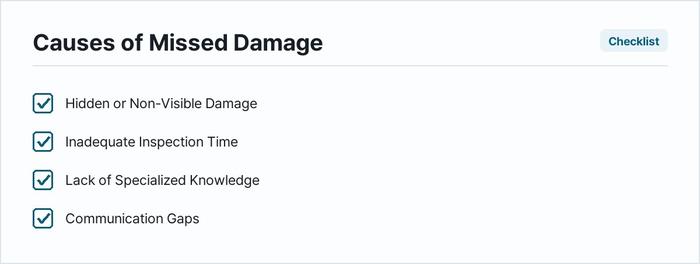
- Hidden or Non-Visible Damage: Many structural issues, such as moisture behind drywall or cracked rafters beneath insulation, are not immediately visible during a standard walk-through. These items often only surface once demolition or repairs begin.
- Inadequate Inspection Time: Adjusters often handle high volumes of claims, especially after major weather events. A rushed inspection can lead to small but significant details being overlooked, such as minor hail indentations on soft metals or smoke soot in ventilation systems.
- Lack of Specialized Knowledge: A general adjuster might not recognize specific technical failures in complex systems like solar arrays, high-end HVAC units, or custom architectural finishes that require niche expertise to diagnose.
- Communication Gaps: If the homeowner is not present during the inspection to point out specific areas of concern, the adjuster may focus only on the most obvious damage, assuming the rest of the property is unaffected.
What to do, in order
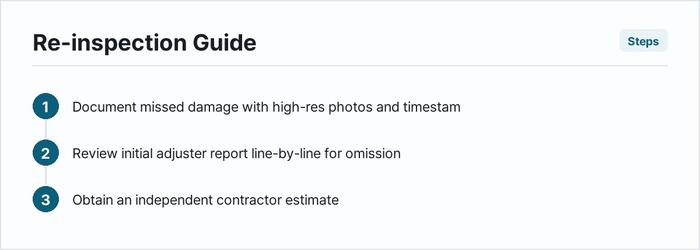
- Document the missed damage immediately
- Review the initial Adjuster Report line-by-line
- Obtain an independent contractor estimate
- Submit a formal request for a Supplemental Claim
- Request a different adjuster for the re-inspection
- Invoke the Appraisal Clause
Before contacting the insurer, gather undeniable proof of the missed damage. Use a high-resolution camera to take wide-angle shots for context and close-up shots to show the severity of the issue. Place a ruler or a common object like a coin next to cracks or dents to provide a sense of scale. Use a high-lumen flashlight to highlight water stains or hairline fractures that might not show up well in natural light. This step rules out the possibility of the insurer claiming the damage occurred after the initial inspection. By creating a timestamped digital trail, the homeowner establishes that the damage was pre-existing but simply ignored during the first visit.
Compare the physical damage to the written report provided by the insurance company. Look for specific omissions in the "Scope of Work" or "Estimate" sections. Ensure that the measurements for the affected rooms are accurate. If the report lists a room as 10x10 when it is actually 12x15, the material costs will be fundamentally flawed. This step rules out mathematical errors or data entry mistakes as the primary cause of the discrepancy. It confirms whether the adjuster actually saw the area but undervalued it, or if they missed the area entirely.
Invite a licensed contractor to perform a thorough assessment of the property. Ask them to provide a detailed, itemized estimate that uses the same industry-standard software often used by insurers. This estimate should break down labor costs, material quantities, and any required code upgrades. Having a professional second opinion rules out the possibility that the homeowner is overestimating the severity of the damage. If the contractor identifies structural issues the adjuster missed, their professional report serves as a powerful piece of evidence during the re-inspection request.
Contact the claims department or the assigned desk adjuster. State clearly that the original inspection was incomplete and that new damage has been discovered. Submit the photos and the contractor’s estimate via the insurer's official portal or certified mail. This step rules out the risk of the claim being closed prematurely. Most policies have specific windows for filing supplements, so formalizing the request ensures the claim remains active while the new evidence is reviewed.
If the relationship with the original adjuster was difficult or if their competence is in question, the homeowner can request a different representative for the second visit. While insurers are not always required to grant this, they often do to avoid conflict or accusations of bias. This step rules out personal oversight or individual negligence. A fresh set of eyes can often identify patterns of damage that the first person ignored. Ensure that the contractor is present during this re-inspection to speak directly with the new adjuster about technical requirements and material costs.
If the re-inspection still results in a disagreement over the value of the damage, look for the "Appraisal" section in the insurance policy. This is a formal dispute resolution process where both the insurer and the homeowner hire independent appraisers. These two appraisers then choose an umpire to make a final, binding decision. This step rules out the need for expensive litigation or long-term stalemates. Warning: This process usually involves costs for the homeowner, as they must pay for their own appraiser and half of the umpire's fee. Ensure all evidence is backed up and organized before entering this phase, as it is a final determination of value.
When the damage is inside the home's systems
In the context of home insurance, "hardware" refers to the physical systems of the house, such as the electrical panel, the HVAC system, or the plumbing infrastructure. Sometimes damage is not visible to the eye but is internal to these mechanical components. To determine if the missed damage is mechanical or structural:
- Test for functionality: If an adjuster missed a power surge, the outlets might look fine, but a voltage tester will show they are dead. If an AC unit was shaken by a fallen tree, it might turn on but fail to cool due to a refrigerant leak.
- Seek diagnostic reports: For mechanical failures, a standard adjuster's visual inspection is insufficient. A licensed technician must provide a diagnostic report confirming that the "hardware" is failing due to the covered peril (e.g., wind, fire, or water).
- Check for moisture intrusion: Use a moisture meter on walls that look dry. If the meter shows high levels of saturation behind the surface, the structural "hardware" (studs and insulation) is compromised even if the paint looks intact.
| Symptom | Likely cause | What to do |
|---|---|---|
| Low settlement offer | Inaccurate material pricing | Provide local material price quotes to the adjuster. |
| Omitted rooms in report | Adjuster error/oversight | Request a supplemental inspection for those specific areas. |
| New leaks after rain | Hidden roof deck damage | Have a roofer perform a physical lift test on shingles. |
| Crack in foundation ignored | Assumed wear and tear | Get an engineer's report to prove it was caused by the event. |
| Contractor estimate is higher | Difference in labor rates | Ask the insurer to justify their lower labor rate data. |
| Electronics failing later | Power surge or smoke residue | Submit a supplemental claim for technical diagnostics. |
How to keep it from happening again
Preventing missed damage in future claims requires proactive management of the inspection process. The most effective method is to maintain a "home inventory" that includes photos and videos of every room, including the interior of closets and the condition of the roof, taken while the home is in good repair. When a loss occurs, these "before" photos make it impossible for an adjuster to claim that damage was pre-existing or minor.
During any future inspection, the homeowner should act as a guide. Do not leave the adjuster to wander the property alone. Prepare a written list of every damaged item and hand a copy to the adjuster at the start of the meeting. This ensures that even if they are in a hurry, they have a checklist that they must address in their final report. And always insist that a trusted contractor is present during the adjuster's visit. Contractors and adjusters speak the same professional language regarding building codes and construction techniques, which reduces the chance of important structural repairs being labeled as cosmetic. Finally, keep a communication log of every phone call, email, and visit associated with the claim to ensure no details are lost over time.
Can I refuse to sign the initial settlement check?
In most cases, you can deposit a settlement check without waiving your right to ask for more money later, provided the check or accompanying documents do not state "full and final settlement." It is generally safer to clarify with the adjuster that you are accepting the payment as a partial settlement and intend to file a supplement for the missed damage.
What if the adjuster claims the missed damage is from wear and tear?
This is a common dispute. To overcome this, you must provide evidence that the condition did not exist prior to the claim event. This is where maintenance records, recent home inspection reports, or dated photos of the area are vital. If you can show the area was in good repair shortly before the incident, the "wear and tear" argument is invalidated.
How long do I have to ask for a re-inspection?
The timeframe varies by policy and local regulations, but most allow for supplemental claims for at least one year from the date of the loss. Still, it is best to act as soon as the damage is discovered. Waiting too long can make it harder to prove that the damage was caused by the original event rather than a subsequent issue.
Does a re-inspection cost money?
The insurance company does not typically charge the policyholder for a re-inspection or a supplemental visit by their own staff. That said, if you choose to hire an independent public adjuster or a structural engineer to provide evidence for that re-inspection, those costs are usually paid out-of-pocket by the homeowner.
Can I use my own contractor's photos for the re-inspection?
Yes, and you should. Contractors often take photos from angles that adjusters might miss, such as from the top of a ladder or inside a crawlspace. Clear, high-quality photos from a professional contractor are considered credible evidence and can often trigger a re-inspection without further debate.
Frequently Asked Questions
Can I refuse to sign the initial settlement check?
You can usually deposit the check as a partial payment unless it is marked as a 'full and final release.' Always clarify in writing that you are seeking a supplement.
What if the adjuster claims the missed damage is from wear and tear?
Provide 'before' photos or maintenance records to prove the area was in good condition prior to the incident, which refutes the wear and tear claim.
How long do I have to ask for a re-inspection?
While policies often allow up to a year or more for supplements, you should request a re-inspection immediately upon discovering the missed damage to ensure a clear link to the event.
Does a re-inspection cost money?
Insurers do not charge for their own adjusters to return. However, hiring your own experts like engineers or public adjusters to support your case will involve personal costs.
Can I use my own contractor's photos for the re-inspection?
Yes. Professional photos from a contractor are highly effective evidence and can help justify the need for a follow-up visit.
Disclaimer
This article is general information, not financial, tax or legal advice. Rules, rates and eligibility change and depend on where a reader lives and on their own situation. Figures here are illustrative; confirm current terms with the provider or agency involved, and consult a licensed professional before acting on a decision that carries real money.